Purple Blossoms
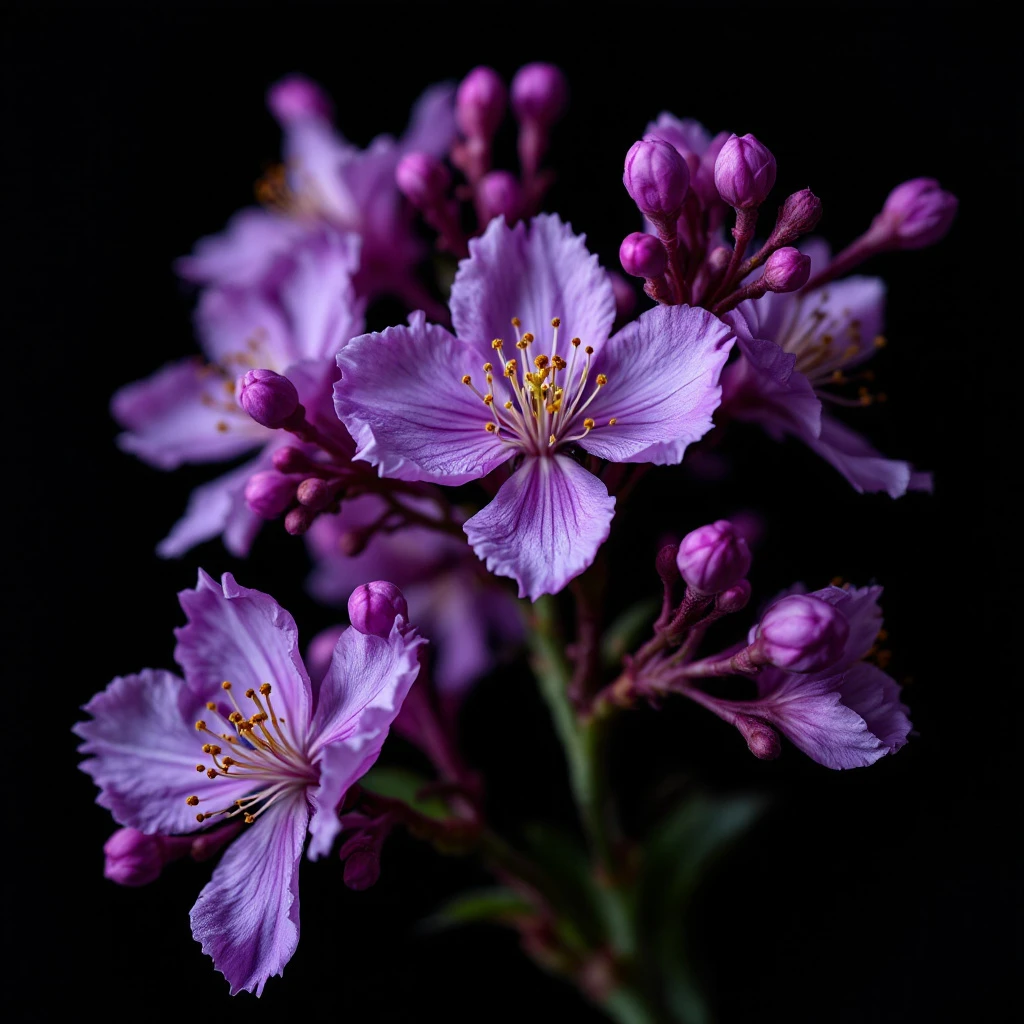
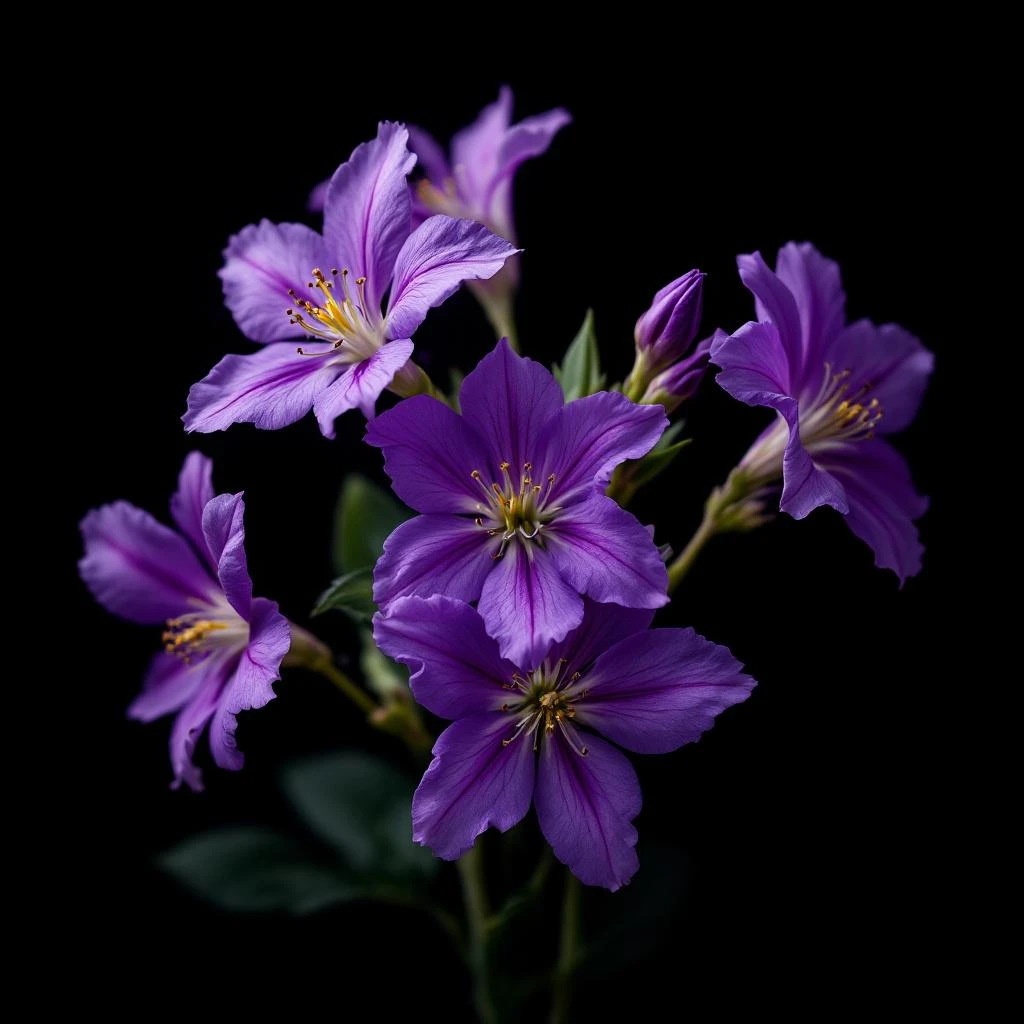
Purple blossoms, the violet at the forefront, open with a powdery sweetness wrapped in green leaves. They form the quiet backbone of classic florals and surprise with a scent both nostalgic and coolly mineral.
Character
How it smells
Powdery sweetness from a flower that hides its voice.
The violet is called a 'mute flower' because its fragrance molecules (ionones) temporarily numb the olfactory receptors, so the scent seems to vanish after only seconds.


Origin
France
Violet holds one of the most storied positions in European fragrance history. Its cultivation for perfume took root in Grasse in 1867, building on an Italian tradition that stretched back to Parma, where Marie Louise, Duchess of Parma and Napoleon's second wife, championed violet-based compositions in the early 19th century.
The flower appeared in classical Greek and Roman garlands and pomades, valued as much for its symbolic association with fidelity and modesty as for its scent. By the late Victorian era, violet became a signature accord in fine perfumery, appearing in many of the era's most celebrated compositions.
The challenge of capturing its fleeting aroma, however, shaped an entire branch of aroma chemistry. Chemists' attempts to identify what made violets smell the way they did eventually led to the isolation of ionone in the late 1800s, a breakthrough that opened the door to modern synthetic perfumery and forever changed how flowers could be translated into fragrance.
Wears it best
Fragrances featuring Purple Blossoms
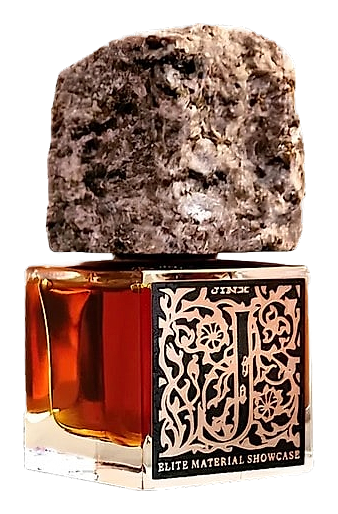
Brands
Brands known for Purple Blossoms
Good to know
Questions, answered
The essentials on Purple Blossoms in perfumery: how it smells, where it comes from, and how it behaves on skin.
What does purple blossoms smell like in perfume?
Purple blossoms, led by violet, give off a powdery, sweet, slightly woody character with cool green undertones. The scent reads soft and nostalgic rather than heady, often described as confection-like with a faint earthy quality.
Why is violet called a mute flower?
Violet earns this name because its primary aromatic molecules, called ionones, temporarily desensitize the olfactory receptors. The scent seems to disappear within seconds, only to return minutes later as the receptors recover.
How is violet fragrance oil produced?
Violet flowers and leaves are processed through solvent extraction with hexane to yield a concrete, which is then washed with alcohol to produce an absolute. Steam distillation is rarely used since the flower's delicate aromatic compounds degrade under heat.
Where are violets primarily grown for perfume today?
Egypt now produces the majority of violet raw material for perfumery, having overtaken Grasse in southern France, where violet cultivation for fragrance began in 1867.
Is violet fragrance natural or synthetic?
Both exist. Natural violet absolute comes from solvent-extracted flowers and leaves. Synthetic alpha-ionone and beta-ionone, first isolated in the late 19th century, are widely used to reproduce the flower's character at scale.
What perfume families feature violet notes?
Violet appears across floral, green, and fougère compositions, and serves as a key component in powdery and aldehydic fragrances. It also adds softness to chypre and oriental bases.
When was violet first used in perfumery?
Violets appeared in ancient Greek and Roman fragrances, but their industrial cultivation for perfumery began in 1867 in Grasse, France, building on earlier Italian traditions centered in Parma.
What is the difference between violet flower and violet leaf?
Violet flower absolute smells powdery, sweet, and confection-like. Violet leaf absolute carries a greener, more vegetal profile with cucumber and earthy facets, making it a staple in green and naturalistic compositions.




