Lavender Tea
A quiet accord where sun-warmed lavender fields meet steeping black tea leaves. Green herbal brightness softens into tannic warmth, creating a scent that feels like a slow afternoon in a garden.
Character
How it smells
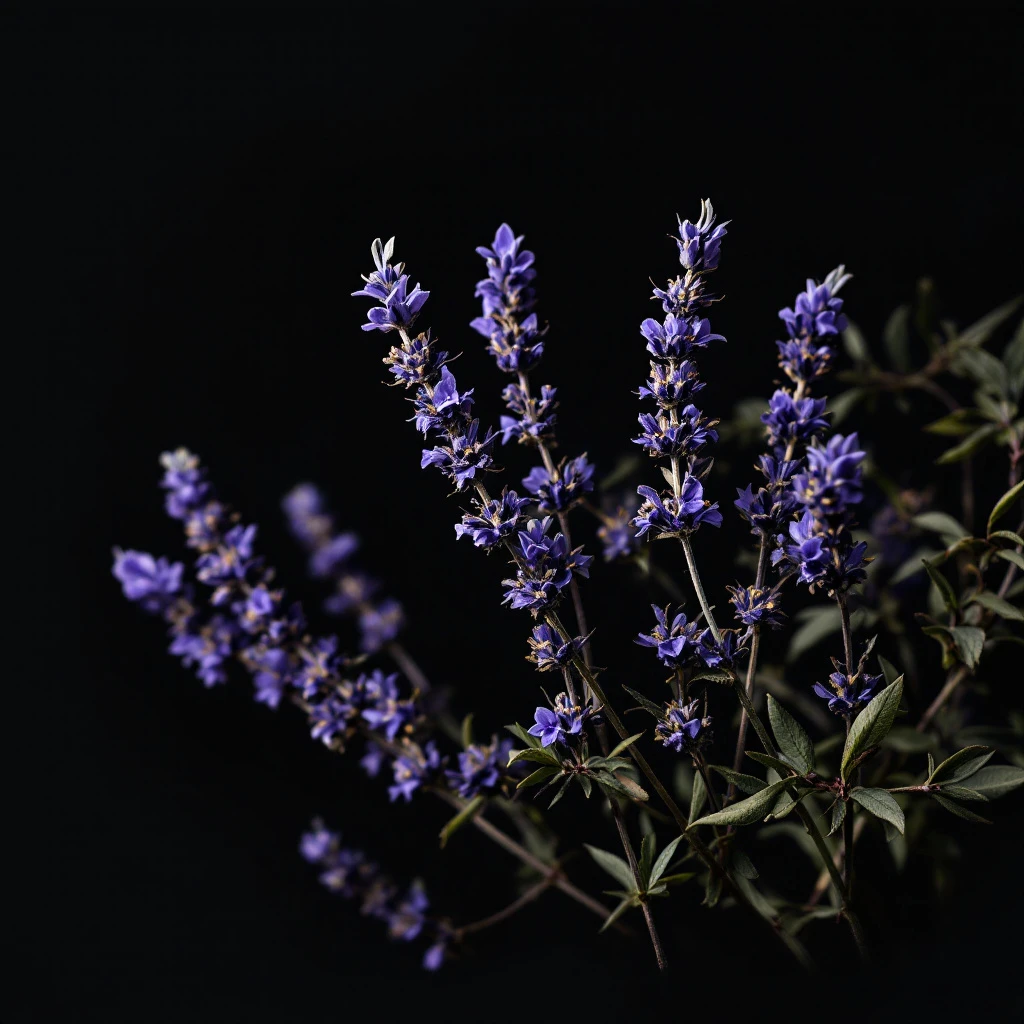
Lavender's herbal clarity steeped in tea's quiet warmth
Lavender has appeared in European scented waters since the Middle Ages, when monastery gardens grew it specifically for perfumery and ritual washing.





Origin
France
Lavender's aromatic history stretches back roughly 2,500 years to ancient Egypt, where it served mummification rituals and temple preparations. By the Middle Ages, European monasteries cultivated lavender in medicinal gardens, and herbalists incorporated it into early scented waters.
By the 1700s, lavender had become a cornerstone of European perfumery, valued as both a standalone fragrance and a blending agent. Its calming reputation made it a fixture in colognes, soaps, and toilet waters across France and England.
Tea entered perfumery through different channels. While *Camellia sinensis* originated in southwestern China and spread across Asia, tea-scented formulations emerged in 19th-century European perfumery as trade with China and India expanded. Synthetic bases like theine and various aldehydes later allowed perfumers to build tea accords without true tea distillation. Pairing lavender with tea creates a relatively modern hybrid accord, one that borrows Mediterranean herbal tradition and Asian beverage culture into a single contemplative note.
Wears it best
Fragrances featuring Lavender Tea
Brands
Brands known for Lavender Tea
Good to know
Questions, answered
The essentials on Lavender Tea in perfumery: how it smells, where it comes from, and how it behaves on skin.
What does Lavender Tea smell like in a fragrance?
Lavender Tea opens with bright herbal freshness from lavender's linalool content, then settles into a warm, slightly tannic dryness reminiscent of steeped black tea. The accord reads calm, green, and aromatic with a soft bitter undertone.
Is Lavender Tea a natural or synthetic note?
Both. Perfumers build it by blending steam-distilled lavender essential oil with tea extracts, though many modern versions use synthetic tea bases like theine or specialized aldehydes to achieve consistency and cost efficiency.
Which fragrance families feature Lavender Tea?
Lavender Tea appears most often in aromatic fougère compositions and herbal-gourmand blends. It works as a bridge between fresh herbal openings and warm drydowns built around amber or soft musk.
What extraction method produces Lavender Tea?
Lavender essential oil comes from steam distillation of flowering tops. Tea accords typically rely on solvent extraction or distillation of fermented *Camellia sinensis* leaves, though some tea notes are reconstructed synthetically.
Where does Lavender Tea originate?
Lavender traces to the Mediterranean, primarily France's Provence region, while tea originates in southwestern China. Modern Lavender Tea accords combine ingredients from both traditions in a global perfumery practice.
Is Lavender Tea a masculine or feminine note?
Neither exclusively. Lavender Tea is genuinely unisex, appearing in masculine aromatic fragrances, feminine herbal florals, and unisex eau de toilettes. Its dry, contemplative character suits a broad range of compositions.
What notes pair well with Lavender Tea?
Lavender Tea pairs naturally with bergamot, rosemary, and clary sage in aromatic compositions. In warmer contexts, it blends well with vanilla, tonka bean, and soft musks that round out its tannic edge.
Does Lavender Tea contain actual tea?
Not always. Many perfumers reconstruct the tea character using aroma chemicals rather than literal tea extracts. When natural tea appears, it typically comes from *Camellia sinensis* leaves processed by steam or solvent extraction.