Charred Citrus Zest
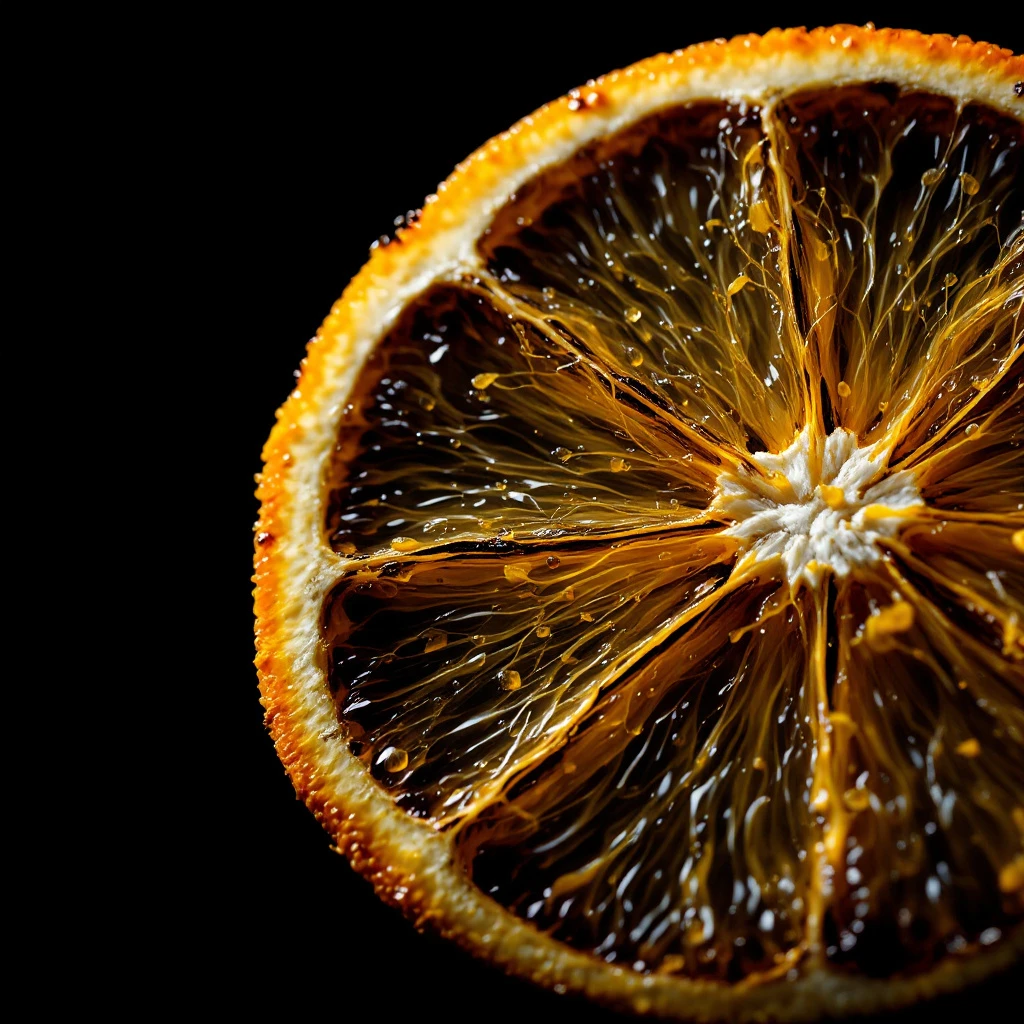
Charred citrus zest captures the fleeting moment when lemon or bergamot peel blackens over open flame. The result bridges bright acidity with smoke, offering perfumers a contrast that reads as both familiar and unexpected.
Character
How it smells
Charring citrus peel was a kitchen accident before it became a perfumery technique, with smoky peel oils entering niche compositions only within the last decade.





Origin
Italy
Citrus peel has perfumed objects and bodies since the twelfth century, when Arab physicians refined alcohol distillation and opened the door to concentrated citrus washes. By the eighteenth century, the Italian Acqua di Colonia popularized bergamot and lemon peel as cornerstone top notes across European perfumery. Charring, however, belongs to the twenty-first century.
The technique emerged as chefs and bartakers discovered that blackened lemon peel releases deeper aromatics when expressed over cocktails, and perfumers quickly adopted the idea. Independent houses in Paris and Tokyo experimented with flame-treated bergamot around 2015, pairing it with incense accords and oud bases. Unlike traditional citrus materials, charred zest carries no lineage in classical perfumery; it exists as a contemporary invention built on centuries-old peel expression.
Today the ingredient signals a modernist approach, bridging gourmand kitchen culture with the structured architecture of fine fragrance.
Wears it best
Fragrances featuring Charred Citrus Zest
Brands
Brands known for Charred Citrus Zest
Good to know
Questions, answered
The essentials on Charred Citrus Zest in perfumery: how it smells, where it comes from, and how it behaves on skin.
What does charred citrus zest smell like?
It opens with sharp lemon or bergamot brightness and settles into a smoky, caramelized undertone. The charred layer adds bitterness and a faint tar-like warmth without overwhelming the citrus top.
Is charred citrus zest natural or synthetic?
Most versions start from cold-pressed natural peel oil treated with controlled heat. Some labs recreate the profile using synthetic furfural and pyrazine compounds, but fully natural charred oils exist.
How is charred citrus zest produced?
Producers flame or roast citrus peel at high temperatures for seconds, then cold-press the treated peel to release the oil. The heat generates smoky aroma molecules that define the note.
Which perfumes use charred citrus zest?
Several independent and niche houses feature it, particularly in smoky-woody compositions launched after 2015. It remains rare in mainstream designer launches.
Is charred citrus zest the same as smoked citrus?
No. Smoked citrus uses wood smoke for extended periods, while charred citrus relies on brief direct flame. Charring produces sharper, more caramelized notes; smoking adds woody depth.
Does charred citrus zest last long in a fragrance?
No. Like most citrus materials, the note fades within one to two hours. Perfumers anchor it with woods or resins to extend its presence in the drydown.
Where does the citrus for this note come from?
Sicily and southern Italy supply most bergamot and lemon peel for expression. Calabrian and Spanish producers also contribute significant volumes.
Can I make charred citrus zest at home?
Yes. Holding a lemon peel over a gas flame until blackened, then bending it to release the oils, produces a similar aromatic effect for candles or simple perfume experiments.