
The Story
Why it exists.
The beginning
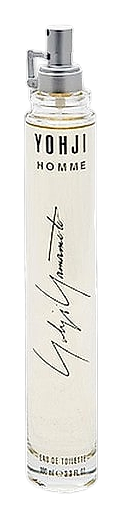
Yohji Homme arrived in 1999, shaped by a single idea: a world without borders. Without definitions. The collaboration with Jean-Michel Duriez wasn't about translating clothing into fragrance. It was about finding the olfactory equivalent of a garment that protects without constraining. The result was a fragrance that refuses to sit still in any category. It opens with a sharp, aromatic bite of anise and lavender that feels almost clinical in its clarity, then softens into something more complex and suggestive. The anise lingers beneath the surface throughout wear, never fully disappearing. Cinnamon and carnation add unexpected warmth without making the composition feel soft.
What makes Yohji Homme structurally interesting is how it refuses the expected arc. This one opens with anise and lavender, aromatic, almost clinical in their clarity, then introduces licorice not as a sweet note but as a memory of sweetness, something half-remembered from childhood rather than something being offered now. The anise carries through the opening and becomes more diffuse as time passes, drifting beneath newer developments rather than vanishing entirely. The cinnamon and carnation add warmth without softening the composition.
The evolution
The opening announces itself immediately. Anise and lavender arrive first, sharp and aromatic, with coriander and bergamot providing a green-citrus brightness that keeps the top from being too austere. This is the introduction, the part where the fragrance is still deciding what it wants to be. The anise softens but doesn't disappear. Licorice becomes more present, not sweet exactly, but suggestive of sweetness the way a memory is suggestive of the thing remembered. Cinnamon and carnation add warmth, and the Brazilian rosewood and geranium introduce a subtle floral complexity that prevents the composition from becoming too heavy. This phase offers warmth and complexity that builds gradually rather than arriving all at once. The drydown arrives with rum, coffee, leather, cedar, sandalwood, and tonka bean as a unified base.
Cultural impact
Yohji Homme occupies an unusual position: a fragrance from 1999 that still feels contemporary. The anise-lavender opening is distinctive in a way that stands apart from conventional masculine fragrances of its era, and the licorice-rum drydown remains a combination that you won't find everywhere. The overall effect is genuinely difficult to categorize, shifting between aromatic, spicy, and woody territories without settling comfortably into any of them. For those who seek compositions that refuse easy categorization, this is worth the search.