
The Story
Why it exists.
The beginning
Spicebomb arrived in 2012 as Viktor & Rolf's answer to their own Flowerbomb, a masculine counterpart built from the same conceptual logic: take something explosive and pour it into a bottle. The designers had spent years interrogating what fragrance could declare. Flowerbomb made that argument in florals. Spicebomb makes it in spice. Olivier Polge constructed two opposing accords, a fiery heart of chili, saffron, tobacco, and leather colliding with a bright, almost icy top of bergamot, grapefruit, elemi, and pink pepper. The collision is the point.
What makes the structure work is the hand-off. The top notes don't linger, they arrive fast, make their impression, and get out of the way. Within minutes, the fiery accord takes over and the coolness becomes a memory that somehow makes the warmth feel more intense by contrast. The tobacco doesn't dominate early; it builds slowly through the heart, finding its way alongside the cinnamon and paprika until you're not sure which note is leading. By the time vetiver arrives in the base, the composition has shifted twice and somehow still feels like one coherent argument.
The evolution
The opening is a jolt. Pink pepper and citrus arrive together with a sharpness that borders on metallic, bergamot and grapefruit lending a brightness that almost reads as cold. Then the turn. Within ten minutes, cinnamon rises through the top like heat through water. The metallic edge softens as the heart opens: saffron and paprika adding depth, a faint sweetness that keeps the spice from becoming harsh. The heart is where Spicebomb earns its name, it sits close and warm, projecting just enough. By the second hour, tobacco and leather begin to anchor everything. Vetiver adds an earthy, almost smoky counterweight. The drydown is intimate, close to the skin, lingering for hours after the initial burst has settled. On fabric, it outlasts most things in the wardrobe. On skin, it's still there when you wake up.
Cultural impact
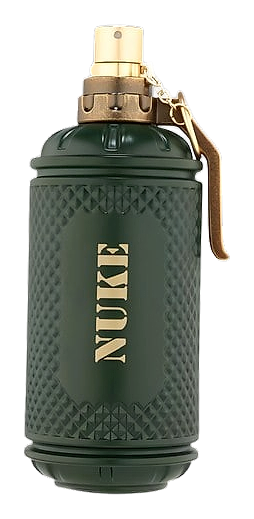
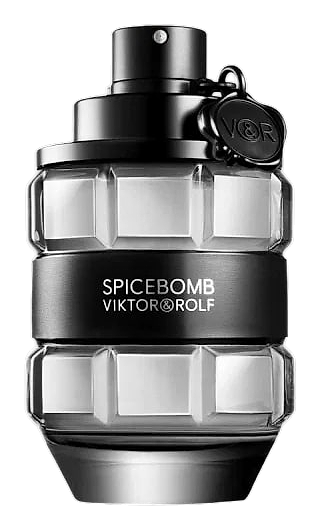
Spicebomb landed in 2012 as the deliberate masculine counterpart to Flowerbomb, applying the same conceptual logic, take something explosive, bottle it, to a different material register. Where Flowerbomb asked what florals could declare, Spicebomb asked what spices could say. The fragrance became one of the defining men's releases of its era, popular enough to spawn flankers and sustain a loyal following well past its launch year. The grenade-shaped bottle, designed by Fabien Baron, became part of the fragrance's identity, a visual pun that made the scent's name literal.