
The Story
Why it exists.
The beginning
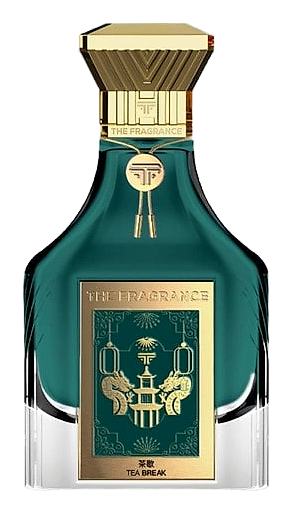
Tea Break arrived in 2026 from the house The Fragrance, composed by Şadi Advan as part of the Urban Zen Collection. The name sits between two languages, English and Mandarin, and so does the composition. The fragrance treats tea as a complete ritual rather than a single brewed note, and the construction reflects that. The steam rising. The cup set down. The room after. Advan is credited as both perfumer and brand owner, and the formula shows an editorial appetite for tonal contrast. Almost no sweetness to speak of. The result reads as green on green, then a hush of resin and wood that arrives like the end of a long afternoon well spent, grounded in bamboo leaf and Darjeeling tea at the top, mate and clary sage at the heart, and benzoin, hinoki, and moss carrying the base.
What's unusual here is the restraint. Bamboo leaf and Darjeeling tea share the top, two greens that could easily blur into each other. Clary sage threads through the heart, lifting the tea with a cool, slightly bitter edge that keeps the whole thing from turning genteel. Mate absolute sits in the middle of the structure, adding a smoky herbal layer that deepens the green without weighing it down.
The evolution
The first ten minutes smell like wet leaves and a quick green lift of bamboo before the Darjeeling settles in with something mineral and almost tannic. By the thirty-minute mark the tea has darkened. Mate and clary sage soften the edges, and jasmine threads through without ever announcing itself. This is the phase most people notice first, a quiet green-floral that reads like damp moss under a handrail. Two hours in, the base moves forward. Benzoin warms the resin family while hinoki wood takes over, and moss grounds everything with a damp, earthy hum. There's almost no evolution in sweetness, and the overall shape of the wear stays close to the skin rather than broadcasting outward, which gives the fragrance an introspective quality.
Cultural impact
Tea Break 茶歇 is composed around a layered treatment of tea as a central material, and the choice to build the accord from bamboo leaf, Darjeeling tea, mate, and clary sage rather than a single recognizable brew gives the fragrance a particular kind of identity. The bilingual title, pairing the English phrase with its Mandarin equivalent, places the release in dialogue with both Western and East Asian olfactory traditions without leaning fully into either. Within the Urban Zen Collection, the composition reads as a meditation on pause and ritual, using green, herbal, and resinous materials to evoke a sense of held breath between activities.