
The Story
Why it exists.
The beginning
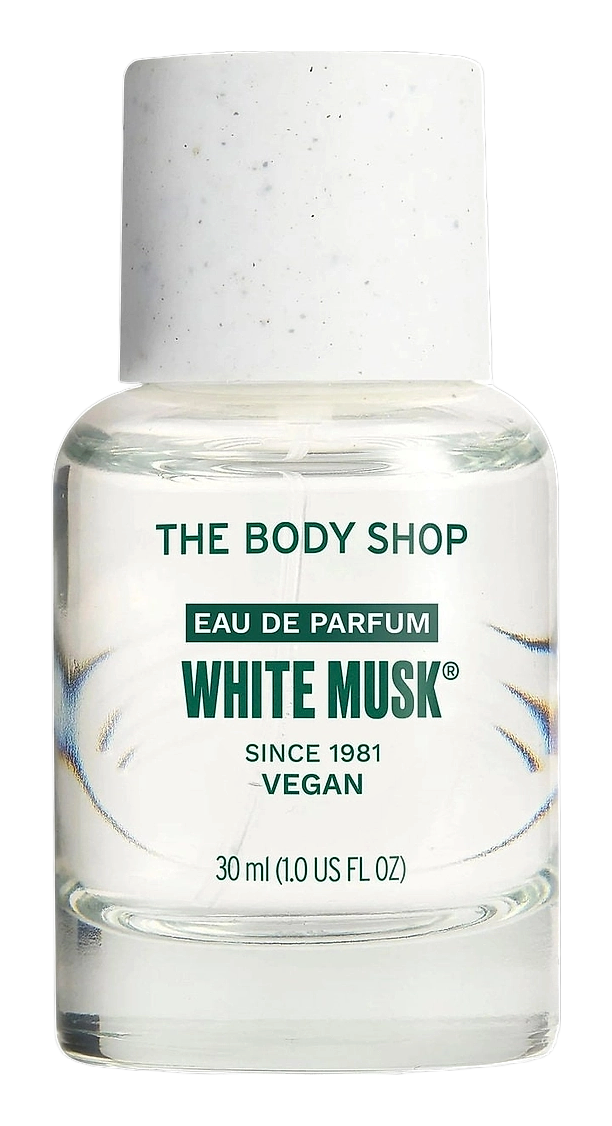
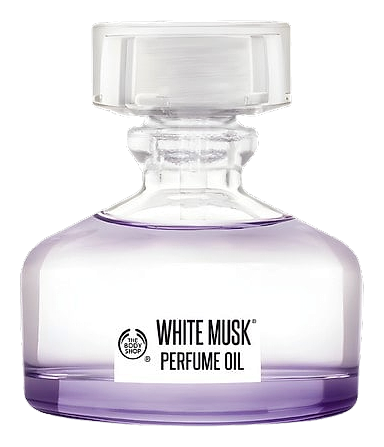
In 1976, Anita Roddick opened a modest green storefront in Brighton with a conviction: how a product arrives in the world matters as much as what it does. By 1981, The Body Shop had expanded across the UK, and White Musk arrived, the first fragrance to carry the brand name. The brief was clear: a clean, ethical alternative to the heavy, animalic musks that dominated the category. No captive molecules borrowed from fashion houses. No lab-grown complexity dressed as sophistication. Just a musk that smelled like skin after a shower, and the quiet ethics of cruelty-free sourcing baked into every note.
What makes White Musk unusual is how the pyramid collapses inward. Musk appears in the top, heart, and base, a triple presence that most fragrances avoid because it risks monotony. Here, it creates the opposite: the scent reads as a single, coherent impression rather than a progression of parts. The white florals, lily, ylang-ylang, don't arrive and depart. They rise through the musk, adding clarity and a faint tropical warmth without ever overshadowing it. The result is a fragrance that smells complete from the first spray rather than unfolding into one.
The evolution
The top notes arrive clean and immediate. Musk provides a soft, transparent opening that smells like skin warmed by a morning shower. Lily and ylang-ylang add a faint tropical sweetness, not loud, just present. There's no sharp aldehyde burst, no citrus to cut through. Just a gentle clarity that reads as familiar almost instantly. Within the first hour, jasmine and rose enter the picture. They don't compete with the musk, they deepen it, adding warmth and a barely-there floral sweetness. The composition starts to feel less like a fragrance and more like a second skin. This is the phase where wearers either fall in or stop noticing entirely. The drydown is where White Musk earns its reputation. Amber adds a faint resinous warmth. Iris contributes its signature powdery softness. Patchouli and vetiver ground everything with something slightly earthy, slightly green. The musk persists, but now it's layered, textured, warm. On skin, this phase lasts for hours. On fabric, it can linger until the next wash. The scent never fully disappears.
Cultural impact
White Musk arrived in 1981 with a different brief than most debut fragrances. Rather than chasing fashion's prevailing trends, it offered a clean, ethical alternative to the animalic musks that dominated the category. The cruelty-free positioning was unusual at the time, and controversial enough to be part of the brand's identity. What set it apart was restraint: the powdery, skin-clean musk that reads as approachable rather than challenging. It became the fragrance people wore when they wanted something present but not demanding. The Body Shop's community-trade sourcing, linking smallholder farmers in India, Brazil, and Tanzania with the brand's ingredient needs, gave the composition a story beyond the bottle.