
The Story
Why it exists.
The beginning
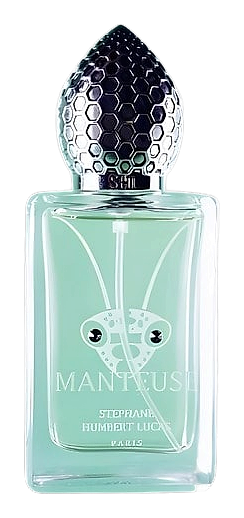
Manteuse takes its name from the mantis, nature's most seductive predator. Stéphane Humbert Lucas built this fragrance around a single concept: the femme fatale who breaks hearts and calls it self-defense. The name carries that duality. Beautiful. Intentional. Dangerous. Honeyed white florals open the composition like an invitation, but leather and animalic notes arrive like a revelation. This is the fragrance for the person who walks into a room and already knows how it ends.
The white florals at the opening aren't decorative. They're the lure, sweet, luminous, disarming. But beneath the honey and blossoms, leather and animalic notes form a second skin. The combination of natural musk, styrax, and patchouli in the base creates a drydown that is primal and intimate, the kind that lingers on fabric and skin long after the first hour. This is what makes Manteuse distinctive: it doesn't just evolve. It transforms from beautiful to essential.
The evolution
The opening hits bright and floral, Italian bergamot, white flowers, a honeyed sweetness that feels like a gift. For the first thirty minutes, it reads like something polished. Then the honey deepens. Leather arrives, settling into the composition with weight. The sandalwood and vanilla in the heart create warmth, but it's the animalic notes and natural musk that take over, close, warm, present without projecting. By hour three, Manteuse has become something else entirely. The white florals are gone. What's left is the styrax, the patchouli, the base that doesn't fade. On fabric, it holds for a full day. On skin, it becomes part of you.
Cultural impact
Discontinued yet sought-after, Manteuse has developed a cult following among niche collectors who appreciate its bold, predatory character. The honey-leather-animalic combination is not for everyone, and that divisiveness is part of its appeal. Wearers either find it intoxicating or unsettling. There's no middle ground.