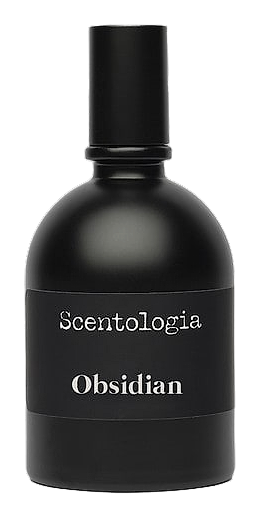

The Story
Why it exists.
The beginning
Obsidian is volcanic glass, formed under extreme heat, cooled in an instant, sharp and permanent. The perfumers, Théo Belmas and Thomas Obroki, worked with that material logic: a fragrance that holds its edge, then softens. Not dark for darkness's sake. Dark with weight. Dark that warms as it settles. The opening arrives cold. The drydown arrives warm. The glass is the same glass. Just different hands holding it.
What makes Obsidian work is the friction between violet and saffron. Violet is powdery, slightly bitter, a classic perfumery note that carries weight and tradition. Saffron is metallic, almost medicinal, the kind of material that lifts a composition above the ordinary. Putting them together is unusual. Neither note is trying to dominate. They're in conversation, and the conversation is what drives the whole structure forward. The orris root deepens the violet without resolving it. The warm base, vanilla, tonka, amber, eventually softens everything, but it takes its time. Cashmere wood is a modern choice here, giving warmth without the expected sandalwood route.
The evolution
The opening is the statement. Rosemary, saffron, bergamot, sharp as a broken edge. The bergamot keeps it from going fully medicinal, a brief citrus cool that prickles rather than comforts. Some wearers describe the first minutes as confrontational. That changes. Within twenty minutes, the violet arrives with the rose, and the sharpness folds into something powdery, almost sweet. The heart doesn't bloom, it settles. The transition to the base is where Obsidian earns its reputation. Patchouli, vanilla, tonka, amber arrive together and stay. The drydown is the payoff: warm, close, intimate. Not a room-filler in the final hours, something that lives against the skin. Cashmere wood keeps the base from becoming dense or heavy, lending a creamy softness that rounds the edges of the earthier notes without flattening them.
Cultural impact
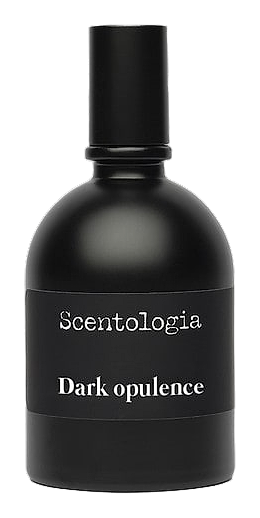
Obsidian sits within Scentologia's Alkəmē collection, an extrait de parfum concentration that carries real weight. The fragrance is presented as a complete proposition, where the name functions as a semantic instruction rather than a simple label. Its audience is someone who already understands the house's vocabulary: fragrance as a private conversation, not a public announcement. The interpunct naming system treats each scent as a self-contained statement, building a language of scent that rewards familiarity with the collection.