The Story
Why it exists.
The beginning
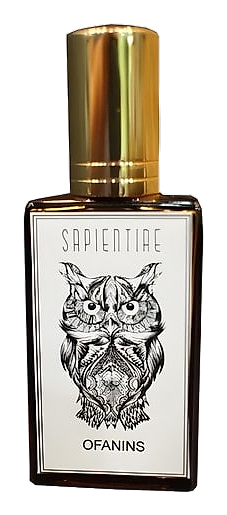
Ofanins arrived in 2017 from perfumer Sanderson Santana. The name carries weight without explanation, something ancient-sounding, something that earns its meaning slowly. Sanderson Santana built Ofanins around a simple tension: bright, almost aggressive citrus at the opening, and a base that refuses to let go. Blood orange, Calabrian bergamot, cardamom, a top that announces itself confidently. Then the hand-off to a heart that complicates things. Blue cypress, rose geranium, jasmine, ylang-ylang, the floral aspect doesn't soften so much as deepen. By the time the drydown arrives, the fragrance has become something else entirely. Cedar, sandalwood, oakmoss, patchouli, and agarwood anchor the composition in the territory it was always heading toward. The name Ofanins doesn't point to a place or a person. It points to an intention, a fragrance that asks to be worn, not discussed.
The structure here is unusual for 2017. Most fragrances in that period leaned either aromatic-fresh or warm-oriental. Ofanins does both, in sequence. The blood orange and Bulgarian lavender open the door. The blue cypress and ylang-ylang hold the middle ground. The oakmoss and agarwood arrive late and leave last. That sequencing, citrus-spice to aromatic-floral to woody-mossy, isn't common in niche perfumery, where simpler pyramids tend to rule. The presence of five base notes, including both Indian sandalwood and oud, suggests Sanderson Santana was building something that would outlast a single wear. This is a fragrance designed for the drydown, not the first spray.
The evolution
The opening is immediate and confident. Blood orange and Calabrian bergamot hit together, with the cardamom arriving thirty seconds later to add a warm, slightly resinous edge. The Bulgarian lavender keeps the citrus from becoming sweet, herbal, almost dry, the kind of lavender that smells like the plant rather than the bottle. Two hours in, the jasmine and ylang-ylang begin to show. Not loudly. The blue cypress is doing the heavier lifting at this stage, adding a faint mineral quality that lifts the floral heart without softening it. By hour three, the wood takes over. Cedar and sandalwood form the structure. Patchouli adds the earth. The oakmoss is the surprise, present, slightly animalic, the kind of mossy depth that was more common in older compositions and less common in 2017 releases. The agarwood arrives last, rounding the base into something denser and more persistent. The sillage drops from moderate to intimate around hour four. The drydown that follows, sandalwood, cedar, a ghost of oakmoss, holds for another two to three hours on most skin.
Cultural impact
Ofanins occupies a distinct position in the niche fragrance landscape as a 2017 release that prioritized structural complexity over commercial accessibility. Its non-linear architecture, moving from bright citrus-spice through aromatic florals into a woody-mossy foundation, represented a deliberate choice by Sanderson Santana to create a fragrance that rewards patient wear rather than making an immediate impression. The composition reflects a period when independent perfumers were pushing against the simpler, more linear structures common in mass-market releases.