The Story
Why it exists.
The beginning
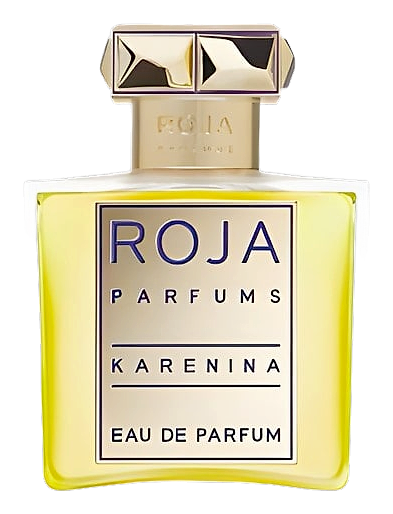
Karenina arrived in 2016, named for the literary Anna Karenina, Tolstoy's tragic heroine whose beauty and passion destroyed everything around her. In Roja Dove's hands, that tension becomes olfactory: a fragrance of contrasts, where powdery softness carries an undercurrent of something darker. The name alone promises drama. The composition delivers it, a towering floral that refuses to be polite, built for a woman who understands that elegance and intensity are not opposites. This is not a safe fragrance. It was never meant to be.
The note structure is unusual in its sheer density of white florals. Gardenia and frangipani are both materials that behave unpredictably on skin, they can read as tropical and sunny, or veer into something headier, even slightly indolic depending on concentration. Here, the aldehydes are the key to the whole operation. They lift and expand the florals, preventing them from becoming cloying, giving the composition an airy quality that keeps the heart from feeling too heavy. Ylang-ylang and orange blossom add lactonic creaminess, while carnation and geranium introduce a green, slightly spicy edge that stops the powder from becoming stale.
The evolution
The opening is immediate and unmistakable. Aldehydes arrive crisp, almost sparkling, followed within minutes by bergamot, citrus that reads more like a brightener than a star. Then the florals arrive. Gardenia dominates early, thick and creamy, with frangipani's tropical sweetness underneath. The jasmine and orange blossom add body. By the second hour, the carnation and geranium have emerged, their green, slightly peppery quality cuts through the creaminess and keeps things from becoming syrupy. The drydown is where Karenina earns its reputation. The aldehydes have faded but the powder remains, now warmed by vanilla and musk. Clove adds a dry, spicy finish. Cedar lingers last, a clean, quiet anchor that stays close to the skin for hours.
Cultural impact
Karenina occupies a specific and increasingly rare territory: the grand, uncompromising floral. In an era of approachable, skin-friendly compositions, it stands apart, a fragrance that behaves like the mid-century greats it references. Reviewers compare it to Robert Piguet's Fracas, which set the standard for tuberose-forward power florals in 1948. Karenina aims for that same territory and that same confidence. It's been discontinued, which has only intensified the reverence among those who know it. The fragrance world has a habit of losing its most interesting compositions before the wider public catches on.