The Story
Why it exists.
The beginning
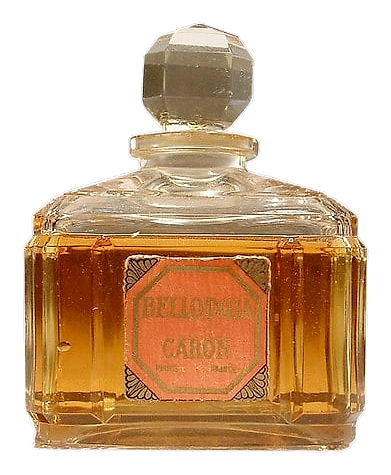
Bellodgia arrived in 1927, when Ernest Daltroff was deep in his experimental phase at Caron, forcing contrasts that lesser perfumers would have resolved into safety. The name itself is a riddle: part Belle, part nostalgia, part something that refuses to be pinned down. Daltroff built this as a collision, warm spice against powdery florals, the kind of tension that his house would make its calling card. It wasn't composed to please. It was composed to last, and to mean something specific to whoever smelled it.
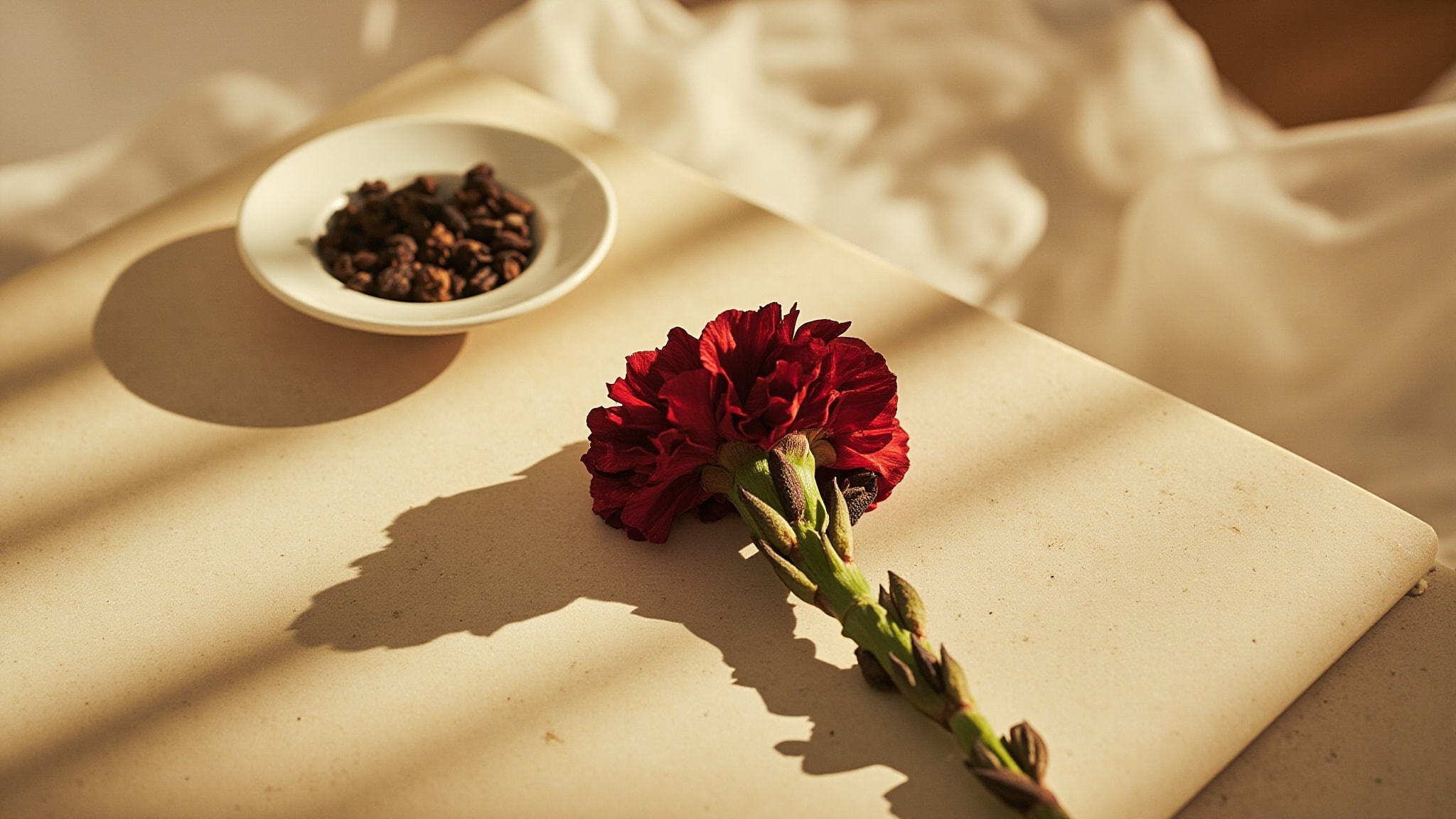
What makes Bellodgia structurally interesting is how it refuses the expected handoff. Most fragrances move cleanly from top to heart to base. Here, the clove stays woven through the entire wearing, present in the opening, whispering through the heart, resurfacing in the drydown alongside sandalwood's warmth. The carnation acts as a bridge: warm and almost spicy in its own right, but softened by rose's petals at the start. Lily of the valley does the invisible work, cool, green, slightly indolic, keeping the jasmine from becoming heady. Vanilla and musk anchor everything to skin rather than fabric.
The evolution
The opening arrives with immediate warmth. Cloves announce themselves first, sharp, almost confrontational, before carnation and rose establish themselves in the space of thirty seconds. The florals don't wait their turn; jasmine threads through immediately, but violet and lily of the valley keep it from becoming sweet. Around the two-hour mark, something shifts. The spice recedes without vanishing, and the composition softens into its heart, powdery, intimate, the kind of warmth that reads as skin rather than perfume. The base announces itself quietly: sandalwood first, then vanilla, then a slow musk that keeps everything close. Eight hours in, on most skin, the drydown is still there, a ghost of clove and warmth that lingers like a memory rather than a statement. On fabric, it becomes a warm stain that won't fully wash out.
Cultural impact
Bellodgia sits in a particular position, not quite a period piece, not quite timeless, but something in between. It was made in an era when Caron was building fragrances as artistic statements rather than commercial products, and it shows. The warm spice and powdery floral combination reads differently now than it might have in 1927, but the structure remains unchanged. Those who find it tend to stay with it.