The Story
Why it exists.
The beginning
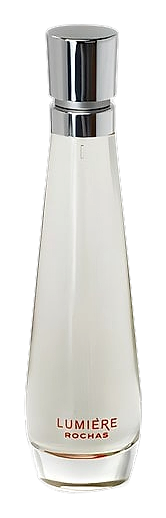
Lumière arrived in 1984, composed by Michel Almairac for a house that believed scent should arrive before its wearer. Marcel Rochas built his Paris fashion house on the principle that a woman announces herself through fragrance first, and Lumière embodies that idea in its clearest form. The name says everything: light, not perfume. Something that illuminates rather than overwhelms. Almairac structured it as an aldehydic floral, bright at the opening and warm at the base, with enough presence to last a full day without ever becoming heavy. The reissue in 2000 kept what worked, those aldehydes, that luminous quality, and pushed it slightly fruitier, slightly lighter, better suited to how people actually wore scent by the new millennium. Same structure. Different moment.
The aldehydes do something unusual here. Rather than anchoring the composition with weight, they lift it, adding sparkle and diffusion without the creaminess that can make aldehydic fragrances feel dated. Combined with bergamot in the opening, the effect is immediate brightness, a shimmer that clears the air. The white florals that follow, honeysuckle and lily of the valley, never crowd each other out. They take turns, with honeysuckle's honeyed richness softened by lily of the valley's clean, slightly green restraint. Then the apricot arrives, adding a creamy fruitiness that bridges the florals into the warm base.
The evolution
The aldehydes hit first, bright and shimmering. Bergamot joins within seconds, adding a citrus crispness that makes the opening feel sunlit rather than heavy. This phase lasts about fifteen minutes before the florals take over. Honeysuckle and lily of the valley arrive together, with lily of the valley providing a green cleanliness that keeps honeysuckle's sweetness from becoming too much. Apricot and damask rose emerge slowly, roughly an hour in, warming the composition without softening it. The white florals begin to recede after three to four hours, leaving apricot and the base notes. Sandalwood and vanilla become dominant by hour five or six, with musk holding everything close to the skin. By hour eight, only a whisper remains, vanilla and sandalwood, intimate and warm. The next morning, skin smells like fabric that dried overnight: soft, faintly sweet, gone unless you press your nose to it.
Cultural impact
Lumière arrived in 1984 as Rochas continued its lineage of aldehydic florals after the landmark Femme. The fragrance occupies a particular niche in perfumery history, representing the evolution of the aldehydic floral genre into lighter, more translucent territory. Its cultural significance lies in the 2000 reissue, which reintroduced the composition to a new generation while sparking discussion about reformulation, authenticity, and how classic structures translate across decades. Collectors value the 1984 version for its fuller aldehydic presence, while the reissue attracts those seeking accessible entry into aldehydic florals without the weight of vintage formulations.