
The Story
Why it exists.
The beginning
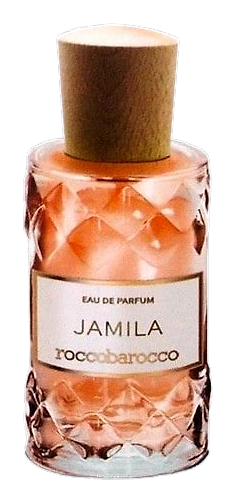
Jamila arrived in 2017 as part of Roccobarocco's private Oriental Collection, a line built for wearers who want their scent to carry the room without announcing it. The house has always treated fragrance as an extension of personal style, not an accessory bolted on after the fact, and Jamila carries that brief into territory the brand hadn't mapped before: dense, resinous, and unapologetically warm. The fragrance leans into that promise without leaning soft. Jamila goes the other direction entirely from what you might expect at first glance. Aldehydes strike first, bright and slightly astringent, then the whole composition pulls inward, toward smoke and incense, toward materials that hold heat rather than scatter it.
What's distinctive about Jamila is the restraint hiding inside its density. Oriental compositions often drown in sweetness. This one keeps labdanum and benzoin in the support role and lets smoke and incense carry the architecture. The aldehydes at the top aren't decorative; they create the bright tension that makes everything below read sharper. Cashmere wood in the base adds a tactile quality, the drydown feels less like a fragrance and more like a fabric. The patchouli grounds it without taking it anywhere dirty.
The evolution
The first thirty minutes belong to the aldehydes and artemisia, bright and slightly metallic, the kind of opening that makes someone across a table glance twice. Then the artemisia drops back and the incense arrives. Not the dusty church variety. Something closer to a smoldering stick, resinous and green, curling upward through the structure. Smoke builds in the second hour, and it changes character as it goes. Early smoke reads sharp, almost charred. By hour three it has softened into a dry, woody haze that sits close to skin. The labdanum starts pulling weight around the four-hour mark, and the cashmere wood takes over the base, lending the drydown a brushed, almost textile quality. What lasts past the five-hour mark is the benzoin and patchouli working together: a low, balsamic hum that clings to scarves and jacket collars well into the next day. On fabric the next morning, Jamila still reads as deliberate, still smells like someone going somewhere.
Cultural impact
Jamila sits in a quiet corner of the oriental genre, dense enough to satisfy wearers who want their smoke and resin, restrained enough to avoid the cloying territory that turns people off the category. The kind of scent that pairs with a wool overcoat and a reason to stay out late. It reads as something composed, deliberate, built for the kind of evening that asks more of a fragrance than fresh citrus ever could. The appeal sits in its restraint as much as its density. Where some orientals pile sweetness on top of sweetness until the whole thing collapses into confection, Jamila keeps its proportions tight.