The Story
Why it exists.
The beginning
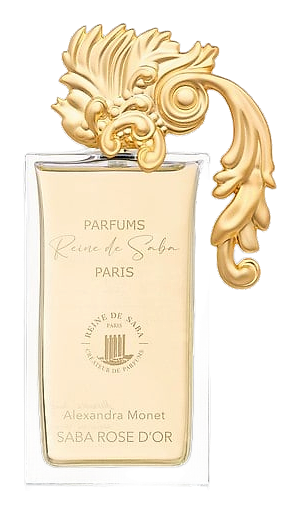
Saba Rose d'Or sits at the heart of Reine de Saba's rose-dominant repertoire, composed by Alexandra Monet and launched in 2026. The name channels 'Saba,' the ancient root of the Queen of Sheba legend, layered with 'Rose d'Or,' a deliberate nod to gilded floral luxury. The house draws its identity from founder Habib Al-Sowaidi's Yemeni upbringing and the aromatic traditions that once moved along the Incense Route. Monet, working with DSM-Firmenich materials, built this composition to translate that heritage into something modern: an opulent Damask rose anchored in sweet, woody territory rather than the sharper, more traditional Arabic rose-oud formula.
What makes Saba Rose d'Or structurally interesting is the use of both Damask rose essence in the opening and Damask rose absolute at the heart. Essence delivers the bright, almost green lift that most people associate with fresh rose. Absolute brings the dense, jammy, almost fermented depth, the rose that smells like it's been steeped in honey. Layering both creates a rose that moves, that shifts between airy and rich within the first hour. The praline addition pushes the composition into gourmand territory, but the vanilla is restrained, warm rather than sugary. It's a balancing act: enough sweetness to seduce, enough wood and musk underneath to keep the whole thing from collapsing into confection.
The evolution
The first 20 minutes belong entirely to Damask rose, bright and almost dewy, like crushed petals held up to morning light. The rose absolute arrives next, thickening things up, and the praline and vanilla fold in almost immediately, turning the composition warm and golden within the hour. The rose never fully disappears, but it stops being the main character somewhere around the two-hour mark. The guaiac wood and cedarwood take over, smoky and dry, with vetiver adding a green earthiness underneath. The musk settles last, turning the whole thing soft and close to skin. By hour five or six, what's left is a warm, woody, faintly sweet skin scent, the praline ghosted into the musk. On fabric, particularly wool or cashmere, the rose and vanilla linger noticeably longer, sometimes well into the next day. Moderate sillage means it stays personal, a scent for the wearer and anyone leaning close, not for commanding a room.
Cultural impact
Saba Rose d'Or occupies a specific niche within contemporary rose perfumery: the gourmand-floral. Where most modern rose launches chase either the traditional Middle Eastern rose-oud model or the clean, dewy rose-aquatic space, this one plants its flag in the sweet, edible, almost dessert-adjacent territory. It speaks to a wearer who finds the sharper, more austere florals of French niche too restrained, who wants their rose to come with warmth, indulgence, and a certain lack of apology. Within Reine de Saba's own catalog, it sits as the most overtly sweet and feminine expression, distinct from the house's oud and amber works that lean further into classical Arabic perfumery.
The House
Reine de SabaReine de Saba stands as a contemporary French niche fragrance house rooted in Middle Eastern heritage. The house channels the legend of the Queen of Sheba, drawing inspiration from ancient aromatic traditions that once traveled the Incense Route. Founder Habib Al-Sowaidi, whose formative years unfolded in Yemen, channels personal cultural memory into a collection spanning oud compositions, rose-dominant creations, amber-forward scents, and modern musks. The house operates from Paris, placing its work within the tradition of French perfumery while maintaining distinct Yemeni influences in material selection and thematic inspiration.
The Creator
Alexandra MonetHer technique leans on a structured layering of top, heart, and base notes, yet she often subverts expectations by introducing a single, unexpected accord that shifts the fragrance’s direction. Alexandra favors natural extracts—bergamot, neroli, and Tuscan lavender—paired with…