
The Story
Why it exists.
The beginning
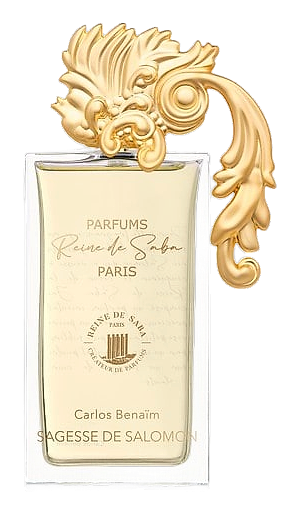
The name carries weight. Solomon, builder of empires, collector of wisdom, known across three continents for the quality of his judgments. Sagesse de Salomon draws from that legacy: the idea that real wisdom isn't about knowing everything, it's about knowing what belongs together. Reine de Saba built its identity on the legend of the Queen of Sheba, a figure who crossed ancient trade routes to meet Solomon with gifts of precious aromatics. That spirit of encounter, the meeting of East and West through fragrance, runs through the house. Sagesse de Salomon is the house's interpretation of that moment: two worlds, negotiating. The result is a scent that moves between cultures and accords as naturally as a well-traveled perfumer might.
What makes Sagesse de Salomon structurally unusual is the way it builds its tension deliberately. The top notes arrive clean and sparkling, pink pepper's CO2 extract is particularly bright here, carrying a faint berry warmth beneath the spice. Mandarin brings a quick citrus flash. Balkans juniper berry adds resinous dryness. These three open together like an introduction at a negotiation: everything is clear, nothing is resolved. The heart is where the negotiation deepens. French lavender and labdanum create a warm, balsamic middle ground that most perfumers would let sit. Carlos Benaïm doesn't. The orris root enters with a powdery, almost violet-like elegance that shifts the register entirely.
The evolution
The opening hits first. A burst of pink pepper, sharp, sparkling, with just enough berry warmth underneath to keep it from being aggressive. Mandarin arrives and fades quickly, a brief citrus flash before the composition settles. Balkans juniper berry lingers in the background, dry and resinous, keeping everything honest. The heart takes over around the 30-minute mark. French lavender and labdanum create warmth, then the orris root arrives, powdery, refined, slightly violet. The scorched leather hasn't announced itself yet, but it's there, building underneath like a decision being made in another room. At the two-hour mark, the leather emerges fully. Not harsh, not aggressive, scorched, which is different. It arrives with authority and settles into the powdery warmth the orris built, creating a drydown that smells like the inside of a leather armchair that's been left in the afternoon sun. Amber, cashmeran, suede, they layer into something close to the skin, warm and intimate, and they stay there. Eight to ten hours on most skin.
Cultural impact
Sagesse de Salomon arrived in a niche fragrance landscape crowded with oud compositions and rose-dominant creations. Its particular combination, powdery iris mid-development over scorched leather, sits in an unusual register that neither follows the Middle Eastern preference for sweet, animalic bases nor fully capitulates to the fresh, citrus-forward Western palate. The fragrance occupies the space between those traditions, which is precisely where the Queen of Sheba herself would have stood.