
The Story
Why it exists.
The beginning
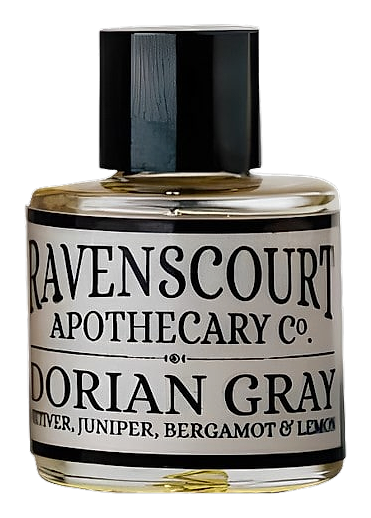
Ravenscourt Apothecary built its world around fragrance as literary homage, drawing on the textures and atmospheres of an era when scent carried meaning in every room. The brand's curiosity leans toward period apothecary tradition, distilling botanicals with a pharmacist's precision and a storyteller's patience. For Dorian Gray specifically, the perfumer aimed to capture the duality at the heart of Oscar Wilde's novel: a surface of immaculate refinement concealing something quietly corrupt. The brief was simple, translate the scent of a young aristocrat who never ages but slowly trades his soul, into something wearable. Dorian Gray is built on a tight trio of notes: bergamot, lemon, and juniper, with vetiver anchoring the base.
The composition leans on juniper as its anchor, a botanical whose bitter, piney bite carries both crispness and a trace of something medicinal. Bergamot and lemon layer on top to bring a bright, almost tart freshness that cuts against the juniper's darker edges. Together, the three notes sketch a portrait of a man whose fragrance is as curated as his art collection, deliberate, beautiful, and faintly unsettling once you know what lies beneath. The result is a scent that feels like stepping into a West End smoking room circa 1890, all cologne and quiet transactions.
The evolution
On first spray, Dorian Gray hits with a bright, almost fizzy burst of bergamot and lemon that reads as bright, cool, and immediately awake. The citrus top notes arrive with a near-effervescent lift, the kind of opening that makes you pay attention before you've even moved. The juniper sits underneath from the very first moment, not waiting to make an entrance, but quietly framing the citrus with its dry, bitter, green character. As the opening settles, the bergamot and lemon begin to mellow, their sharpest edges softening while still maintaining a clean, zesty presence on skin. The juniper grows more prominent in the composition's architecture, taking on a cooling, slightly resinous quality that feels herbal without ever crossing into aromatherapy territory.
Cultural impact
Dorian Gray sits within a wider conversation about how indie fragrance houses approach literary source material as a creative brief. The composition treats Wilde's novel not as costume but as a thematic prompt, asking what restraint, vanity, and concealed corruption might smell like when translated into olfactory form. The result is a fragrance whose juniper-and-citrus architecture reflects the kind of sharp, pared-back aesthetic that has gained traction among collectors who favor composition over decoration.