
The Story
Why it exists.
The beginning
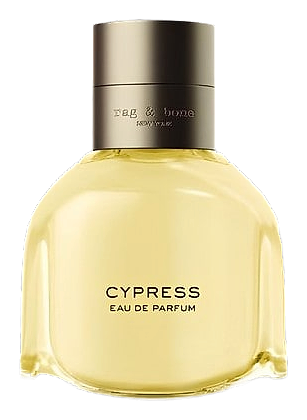
Rag & Bone entered fragrance in 2016, bringing the same measured restraint that defines their New York workwear to a collection of gender-neutral scents. Cypress was one of the first, a statement of intent: a scent that didn't apologize for being green, woody, or unapologetically itself. The perfumer at DSM-Firmenich worked with a single named ingredient as the anchor, cypress, and built outward from there, not toward complexity for its own sake, but toward something that felt considered.
The interesting thing about this pyramid is how the cypress operates. It's in the top notes, which means it arrives first, not as a supporting character but as the main event. But the base of ambroxan, vetiver, and patchouli keeps it grounded. There's no heavy resin or sweetness. Instead, the geranium and violet leaf add a slightly clean, almost mineral quality to the heart that prevents it from going too far in either direction. It's a fragrance that knows what it is and doesn't try to be more.
The evolution
The grapefruit zest opens sharp and clean, almost like a splash of citrus cleaning product before it softens into something more interesting. The cardamom adds warmth almost immediately, a subtle spice that keeps the citrus from feeling too sharp. Then the cypress takes over. It's not a pine forest assault. It's cooler than that. Mineral. Like standing near a conifer in cold weather, the air damp and sharp. The cedar and geranium come into the heart together, and there's a slight soapy quality to the geranium, clean but present, not synthetic. As it settles over the next hour, the ambroxan and vetiver emerge, giving the drydown a dry, slightly smoky quality. The patchouli stays close to skin. Lasts four to six hours on most, closer to skin in the final hour.
Cultural impact
Cypress landed in 2016 as part of Rag & Bone's first fragrance collection, a moment when many fashion houses were still figuring out how to do beauty on their own terms. The gender-neutral positioning was deliberate, a rejection of the traditional segmentation that had defined the industry for decades. Wearers describe it as the scent of someone who doesn't need to announce themselves when they enter a room.