The Story
Why it exists.
The beginning
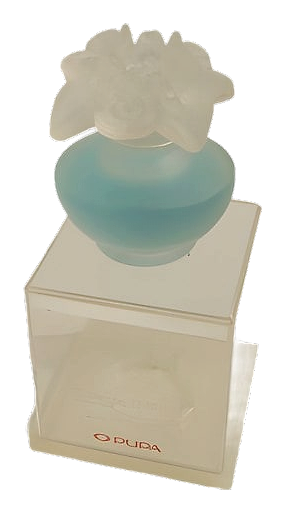
Bleu Ciel arrived in 1998 as Pupa's vision of feminine freshness. The Milanese house, known for color and playful cosmetics, wanted something that felt like morning light over open water. Violet leaf and cyclamen opened the composition, a green, ozonic contrast that set the tone. Peach blossom and lily of the valley followed in the heart, lending softness without sweetness. The base of sage, musk, and cardamom gave the fragrance its unusual aromatic spine. This was Pupa's answer to what a green floral could be: not sharp or metallic, but cool, intimate, and quietly memorable.
The most interesting structural choice in Bleu Ciel is the tension between its opening and its base. Violet leaf and cyclamen create an immediate freshness, crisp, almost dewy, like stems right after rain. But the drydown of sage and musk pulls in a different direction: warm, powdery, skin-close. Most green florals of the era leaned one way or the other. Bleu Ciel holds both. Cardamom appears just enough to leave a faint spice behind the florals, a reminder that this isn't a skin-safe accord, it has personality.
The evolution
The opening hits first: violet leaf's bright, green cut cutting through. Within minutes, cyclamen introduces its watery, ozonic quality, not oceanic in the way modern aquatics are, but something quieter. Less wave, more mist. The heart arrives around the thirty-minute mark, a layered bloom of peach blossom and lily of the valley that softens everything into powder-warm territory. Rose and jasmine deepen the floral mass without making it sweet. By the third hour, sage takes over, herbal, almost meditative. Musk and a trace of cardamom remain. The drydown stays close, intimate, the kind of scent you catch when you raise your wrist to your face.
Cultural impact
Bleu Ciel sits in a specific moment of perfumery history: the late 1990s green floral wave. While much larger houses chased aquatic trends, Pupa built something more nuanced. The ozonic freshness of cyclamen and the herbal depth of sage create a composition that feels both of its era and somewhat outside it. The fragrance attracted wearers who wanted green without sharpness, floral without sweetness, and a drydown that actually interested them. Its discontinuation suggests it found its audience without reaching a wider one, which is often how the interesting ones go.