The Story
Why it exists.
The beginning
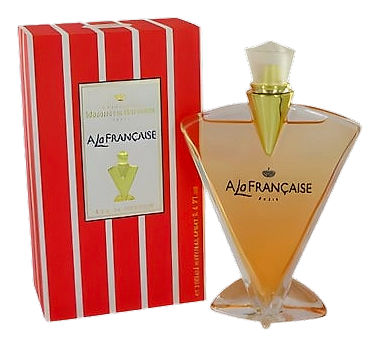
The name says everything. A La Française arrived in 1998 as a statement, not of trend, but of sensibility. The Princesse Marina de Bourbon house had spent four years building a vocabulary around single-flower accords drawn from Versailles garden traditions. This was the moment to stretch further: take the structure of a classic chypre and run it through a contemporary French lens. Blackcurrant as a lead note was not the expected move in 1998, when fruity florals leaned sweeter and heavier. Here it sits cool and tart against green galbanum, refusing the obvious path. The result is a fragrance named for a national character, direct, composed, unapologetic about what it is.
What makes A La Française structurally unusual is the blackcurrant placement. In most chypre florals of its era, blackcurrant appeared as a supporting chord, adding depth to the top, not carrying it. Here it leads from the opening, pulling the galbanum into a sharp, almost vegetable-green register before the florals arrive. The heart is where the composition earns its name: a rose and iris combination that reads as distinctly French in its restraint, not loud or saturated, but present. The oakmoss in the base is the real statement, a commitment to the chypre form at a moment when many houses were softening their moss profiles.
The evolution
The opening arrives crisp and tart, blackcurrant hitting bright, galbanum snapping green behind it. There's an immediate clarity here, a clean sharpness that announces itself without shouting. Thirty minutes in, the blackcurrant begins to recede, but not completely, it lingers as a sweetness underneath while rose and iris bloom through the patchouli-oakmoss base. The transition is smooth, almost seamless. By the second hour, the composition has settled into its chypre identity: moss-forward, earthy, with a dry woody trail that stays close to the skin. The drydown on most skin types reaches four to six hours, with oakmoss and patchouli lingering as a quiet presence, not projecting far, but refusing to fully disappear. On fabric, the blackcurrant can resurface faintly the next day, a soft echo of where it all began.
Cultural impact
A La Française occupies a specific position in the late-90s chypre landscape: between the heavy, moss-laden classics of earlier decades and the sweet, linear florals that dominated the mass market. The blackcurrant-galbanum opening places it slightly outside the expected vocabulary of 1998, giving it an edge that still reads as distinctive today. For those who find most modern florals too soft, this offers a structured, green-tart alternative with real character.