
The Story
Why it exists.
The beginning
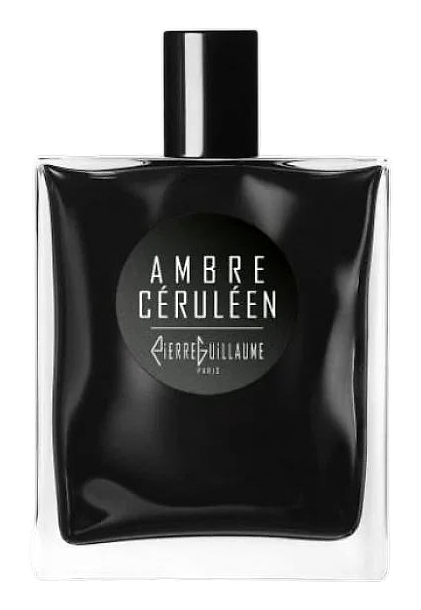
Ambre Céruléen arrived in 2010 from Pierre Guillaume's laboratory, released as part of the Collection Noire. The official description leans minimal: opoponax, tonka beans, and sandalwood form the core, with Moroccan neroli, myrrh, and cardamom illuminating the edges. There's a quiet confidence in how it's composed, letting the notes speak without ornamentation. Opoponax carries that warm, resinous depth, sweet but never syrupy, while tonka adds an almond-like softness underneath. Sandalwood gives the whole thing a creamy architecture, a kind of milky scaffolding that keeps the sweetness from floating away. Then the supporting players arrive: the Moroccan neroli lifts the composition with its bright, green-edged citrus, cutting through the resins like a blade of light.
The composition is unusual for what it leaves out. No vanilla avalanche, no labdanum wallop, no oud flex. Instead, opoponax and tonka bean share the heavy lifting, with sandalwood providing a creamy foundation that keeps the sweetness grounded. Moroccan neroli is the interesting choice, a bright, slightly bitter citrus that brings a green, almost metallic edge to what could otherwise read as a dense, resinous composition. Cardamom adds warmth without tipping into sweetness, its slightly camphorous, almost peppery quality threading through the resins like a quiet current.
The evolution
The opening catches you with a flash of Moroccan neroli, bright and slightly bitter, sitting above the resins like light filtering through stained glass. Cardamom threads in early, warming the citrus into something spiced and almost edible. The neroli then recedes and opoponax takes over, bringing that balsamic, almost medicinal sweetness that defines the composition. Tonka bean emerges next, creamy and almond-like, softening the opoponax's sharper edges. Sandalwood arrives quietly, never announcing itself, just smoothing the transition between heart and base. Myrrh surfaces in the drydown, cool and church-like, with a faint camphorous edge that keeps the warmth from becoming cloying. The development is gradual, each phase building on the last without abrupt shifts.
Cultural impact
Ambre Céruléen has earned recognition as a distinctive entry in the amber category, offering something quieter than many of its counterparts. Wearers describe it as an everyday amber, the kind that works in professional settings without sacrificing warmth. The fragrance appeals to collectors who value subtlety and material nuance over sheer projection, and it's become a touchstone for those drawn to lighter, more transparent oriental compositions. Its composition reflects a particular aesthetic sensibility: restraint over excess, clarity over density.