
The Story
Why it exists.
The beginning
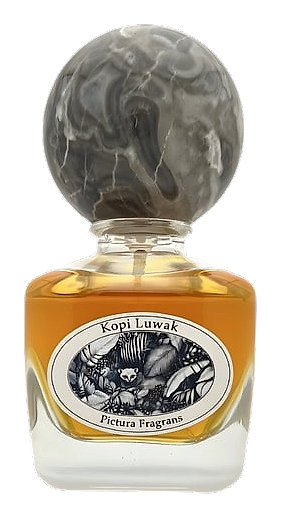
Kopi Luwak takes its name from one of the most talked-about ingredients in the world of luxury coffee, and one of the most controversial. The name translates roughly to 'civet coffee,' a product of Indonesian forestry where the palm civet consumes coffee cherries, the beans passing through the animal's digestive system before being harvested, cleaned, and roasted. The result is a coffee like no other: low-acid, complex, and carrying an animalic undertone that no other processing method replicates. DL Jenkins built this fragrance around that duality, the roasted, almost chocolatey depth of the coffee itself, and the musky, intimate trace left by the civet that made it possible.
What makes the composition work is how Jenkins refuses to let the civet hide. In most fragrances that attempt animalic notes, the instinct is to soften, to round, to make it palatable. Here, the civet is part of the main accord, working alongside smoked Indonesian incense and dark oud to evoke the humid weight of a Javanese night in the rainforest canopy. The coffee isn't a note in the conventional sense. It's the atmosphere. Vanilla and tonka bean appear in the base not to sweeten but to ground, to offer something warm and resinous as counterweight to the feral top. It's a fragrance that understands contrast as structure, not decoration.
The evolution
The opening hits with immediate intensity, roasted coffee, black and bitter, with a caramelized sugar lift that feels like walking into a roastery. Within fifteen minutes, the civet arrives. Not subtle. Not polite. It arrives the way a cat enters a room it's decided belongs to it now. The Indonesian incense weaves through the coffee-civet duet, adding a smoky, slightly medicinal dimension that prevents either from dominating too long. By hour three, the oud and patchouli have settled into the skin, deep, resinous, close. Vanilla emerges as the quiet closer, wrapping everything in warmth. On fabric, this fragrance lasts well past twelve hours. On skin, expect eight to ten. The drydown the next morning reads as smoke and warm skin, intimate, animalic, unmistakable.
Cultural impact
Within niche fragrance circles, Kopi Luwak has carved out a specific lane: the person who wants to understand animalic but finds traditional civet blends intimidating. The coffee note serves as an accessible entry point, familiar enough to ground the composition, unusual enough to reward attention. The controversy of the ingredient itself (the kopi luwak process has drawn ethical scrutiny for caged civet operations, though wild-harvested versions exist) adds a layer of narrative that fragrance enthusiasts tend to gravitate toward. It's a fragrance with a story before you even smell it.