
The Story
Why it exists.
The beginning
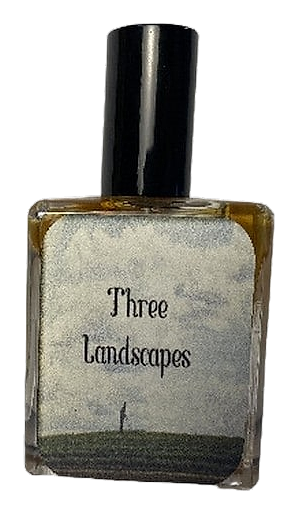
Three Landscapes takes its name from an idea rather than a place, the notion that a single fragrance can hold multiple terrains at once, each note a different horizon. Weston Adam built this composition as a study in contrast: powdery iris and creamy florals on one side, animalic civet and warm opoponax on the other. The question the fragrance asks is simple: can a scent that contradicts itself still cohere? The answer, three landscapes later, is yes, but not without tension. This is a fragrance that argues with itself and makes the argument worth watching.
What makes Three Landscapes unusual is the pairing of orris root with civet, a material rarely used in modern perfumery outside niche and artisanal houses. Orris root brings a powdery, violet-like sweetness that can feel delicate, almost retiring. Civet brings something else entirely: a musky, fecal warmth that smells like skin, like breath, like the animal beneath the abstraction. Opoponax, a sweet myrrh resin, is the bridge between them. It doesn't smooth the contrast so much as hold it at arm's length long enough for both sides to make their case. The result is a fragrance that feels genuinely unresolved in the best way: beautiful and slightly unnerving at the same time.
The evolution
The opening hits quickly: a burst of opoponax resin with a slight bitterness underneath, like sap that's been sitting in the sun. Copaiba balsam adds a honeyed warmth within the first minutes, and then the iris arrives, powdery, violet-soft, almost dusty. It doesn't compete with the resin. It coexists. Ten minutes in, the yellow florals take over. Tuberose absolute is thick here, indolic, the kind of white floral that smells like the plant and the living thing inside it. Ylang-ylang adds a tropical sweetness that rounds the edges without making anything sweeter. This is where the fragrance decides what it is. The jasmine threads through, adding complexity without taking over. By the second hour, the florals begin their slow recession. The civet rises. It doesn't arrive suddenly, it's been there the whole time, waiting beneath the cream. But now it's present. Warm, musky, intimate. The kind of smell that lives close to skin. Mysore sandalwood and iris base carry the drydown into evening. The sandalwood stays creamy and woody; the iris stays powdery.
Cultural impact
Three Landscapes occupies a particular corner of the niche fragrance world: the intersection of powdery iris, animalic depth, and indolic florals that most commercial houses won't touch. Wearers describe it as the fragrance of someone who walks into a room and doesn't need to announce themselves, not because the scent is quiet in a simple way, but because it rewards proximity over projection. The civet note is polarizing by design; it is also, for those who appreciate it, the reason the fragrance works. Phronema's small-batch approach means each bottle is mixed and filled by hand in Saint Louis, giving the work a specificity of vision that larger houses rarely pursue.