The Story
Why it exists.
The beginning
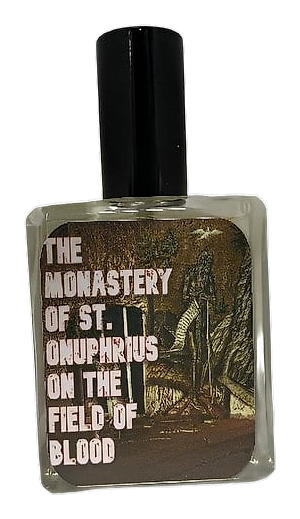
The Monastery of St. Onuphrius on the Field of Blood is Phronema's translation of a place that resists prettiness. Saint Onuphrius is a figure of early monastic life, and the legend that gives this composition its title turns on devotion that does not announce itself through softness. Weston Adam composed this Extrait de Parfum as part of the brand's early catalog, aiming to capture faith that smells not of flowers but of sun-split flagstones and sacrifice. The accord leans into stone, smoke, and skin: a chapel interior where the air itself feels consecrated. There is incense, yes, but it reads more like residue than ritual, the kind of cloud that clings to rough walls after a long day of prayer.
Adam works behind the brand with a literary brief for every release, treating each fragrance as a piece of translated writing. The composition leans into materials that carry their own moral weight: civet and castoreum absolute for the body's raw insistence, Thai oud for the resinous undertone of a chapel that's burned and been rebuilt. Nagarmotha and hay ground it in something agricultural, even pastoral, while white ambergris and Mysore sandalwood give the long exhale its quiet gravity. The animalics here are not costumed or softened.
The evolution
The opening hits with civet and castoreum, unmistakable and almost confrontational, the way incense feels in a stone room with no ventilation. Leather and Thai oud surface within minutes, thickening the air, while nagarmotha adds a smoked-earth edge. The first half hour is the loudest this composition gets. Then Mysore sandalwood steps forward, smoothing the animalics into something meditative. Hay and beeswax lend a dry sweetness, almost like dried herbs left on a church windowsill. As the hours pass, white ambergris takes over, a warm, musky close that sits close to skin. The next morning, what's left is a faint animalic trace, like fur warmed by body heat, and green hojari frankincense still pulsing underneath. The drydown rewards patience: the heavier notes recede in waves, allowing the lighter materials to whisper through the gaps.
Cultural impact
This composition stakes its claim in the space between devotional history and wearable art. The unapologetic animalics earn it a following among collectors who keep a separate shelf for materials that refuse to be domesticated. Resinous, smoky, and slow-moving, it draws wearers who already know the vocabulary of church incense and old leather bindings and want that vocabulary rendered without dilution. Its appeal is narrow and intentional: anyone drawn to civet-forward work, to Thai oud in its rougher presentations, or to compositions that hold their structure over many hours will find it worth the attention.