The Story
Why it exists.
The beginning
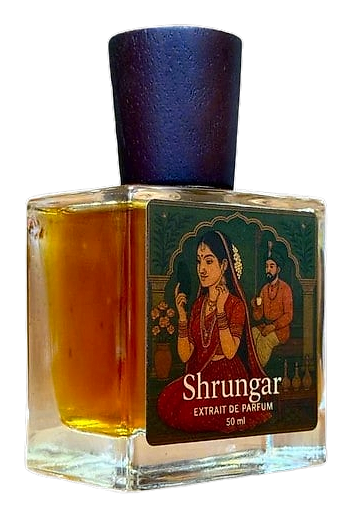
The name comes from the Sanskrit word for adornment, the ritual act of a bride preparing herself for a wedding night. Nitish Dixit built Shrungar around that threshold: the ceremony's final exhale, the room closing behind you, the silence that follows the last chant. He wasn't interested in a fragrance that smells like a celebration. He wanted one that smells like what comes after, the private hour when all the performance drops and something real begins. The inspiration drew from Indian wedding traditions: the heavy silk, the sandalwood paste cooling on warm skin, the frankincense still threading through the room from earlier rituals. Dixit worked with materials that create a composition moving from ceremonial brightness into something darker and more intimate.
The pyramid is unusually wide at the top, seven materials in the opening, but the structure holds because Dixit chose ingredients that share a thread of warmth. Frankincense, rose, jasmine, pink pepper, ylang-ylang, pandanus, and milk don't compete; they amplify each other's softness. The milk note is particularly effective here: not a dairy accord but something lactonic and animalic, like skin warmed under a heavy sari. At the base, the pairing of East Indian oud with castoreum is the composition's most deliberate choice.
The evolution
The opening arrives as a deliberate statement. Omani frankincense smoke curls first, followed immediately by South Indian rose, a combination that feels both ceremonial and intimate, like incense burning in a room where someone has just finished crying. Jasmine sambac appears within seconds, its sweet-indolic warmth threading between the smoke and the florals. The milk note shows itself as the initial sharpness settles: not a food accord, but something lactonic and soft, like the smell of skin after a long day. The heart develops next. Indian black cardamom leads, sharp, green, almost medicinal at first before it warms. Copaiba balm adds a honeyed resinousness that sweetens the spice. Champa flower arrives as the development continues, tropical and waxy, overlapping with the jasmine rather than replacing it.
Cultural impact
The use of castoreum, an animalic note that has divided wearers since perfumery's earliest days, in a modern Indian fragrance signals a house willing to make people uncomfortable. Early discussion among fragrance collectors has focused on the drydown's animalic presence: not every wearer has been won over, but those who connect with it describe it as a composition that reads differently on each person, adapting to individual skin chemistry in ways that feel personal rather than arbitrary.