
The Story
Why it exists.
The beginning
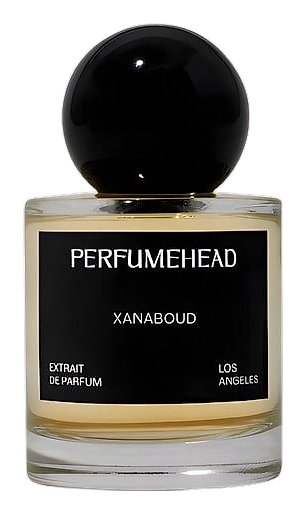
Xanaboud arrives from Perfumehead, the house named for nothing specific, no place, no person, no borrowed mythology, it carries its own weight instead. The perfumer, Constance Georges-Picot, built this as an indulgent private reserve: osmanthus, Turkish rose, and Indian jasmine forming a floral architecture that holds its shape under pressure. The florals don't simply bloom in sequence; they layer and interweave, each note pressing against the others until the whole composition feels solid and intentional. Oud is the woody overtone, voluptuous and present, never decorative. Slightly sweet and slightly burnt, that tension is the point. The fragrance doesn't explain itself. It just lasts.
What makes Xanaboud distinctive isn't any single material, it's the relationship between two forces that rarely share space gracefully. The floral heart (osmanthus, rose, jasmine) could easily become soft, even fragile. The oud and gurjum balsam anchor it, pushing back against sweetness with resinous weight. Cardamom and allspice add lift in the heart, preventing the composition from becoming heavy too early. On the other side, Italian suede, labdanum, and vanilla create a base that feels worn-in rather than synthetic, the kind of warmth that doesn't announce itself. This is a fragrance that respects the skin it lives on.
The evolution
The opening hits within seconds: Calabrian bergamot brightens the air for maybe fifteen minutes before the florals take over. Osmanthus and rose arrive together, jasmine threading through them. The effect is lush without being girlish, there's a darkness underneath already, the oud asserting itself before the heart fully forms. By the second hour, cardamom pushes through, adding warmth and a slight prickliness that prevents the florals from becoming soft. The oud deepens. The composition becomes less about the top notes and more about the resinous, woody core that holds everything together. Hours three through five: the suede emerges. It's present from the beginning, technically, but it takes its time becoming the star. Italian suede worn against warm skin, that's the drydown. Vanilla and labdanum sweeten it slightly, patchouli grounds it. On fabric, this fragrance lives for a full day.
Cultural impact
Xanaboud arrives as part of a contemporary landscape where independent American houses are bringing new perspectives to the oriental genre. The fragrance's floral-oud axis with suede and vanilla represents an approach that values complexity and subtlety. There is nothing performative about its construction; it builds slowly, revealing its structure over hours rather than announcing itself all at once. The composition treats oud not as a status symbol but as a material to explore, integrate, and ultimately make intimate. This is orientalism recalibrated for close quarters, for skin that wants to smell compelling without shouting.