
The Story
Why it exists.
The beginning
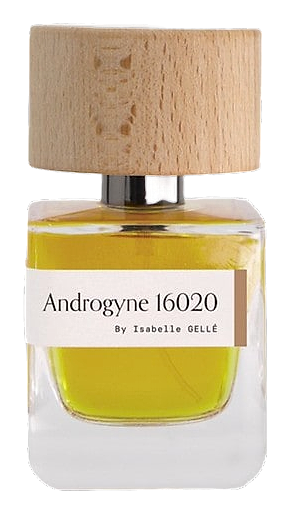
Androgyne 16020 is part of Parfumeurs du Monde's exploration of what botanical-only perfumery can actually do when the materials are given room to speak. Composed by Isabelle Gellé and released in 2021, it sits within a catalog that has made natural perfumery something of a signature, working with absolutes and essential oils as primary building blocks. The official description frames it as an accord that explores the softness of leather, bordered with citrus notes, on an addictive woody base. That tension runs through everything about it: a leather accord presented with the lightness and clarity of citrus at the opening, anchored by a base that doesn't need volume to make itself known.
What sets this composition apart is how few concessions it makes to softness. The citrus opening, yuzu and mandarin, isn't decorative, it's structural, cutting through what would otherwise be a dense, resinous composition. The violet in the heart adds a powdery almost-cosmetic edge that keeps the leather from reading as masculine in any narrow sense. The smoke in the base has weight, carrying the kind of depth that doesn't apologize for itself, but it never tips into pure acridity either.
The evolution
The opening is almost disorienting in its brightness. Yuzu and mandarin hit sharp, lifted further by the green snap of cardamom, and for a brief stretch the scent reads almost like a cocktail garnish, something bittered and cold and lifted. Then the leather arrives, and it doesn't sneak in. Birch tar has a particular weight, tarry and slightly medicinal, and it pulls the citrus down toward something darker, earthier. Violet and juniper bridge that gap, the violet powdering the leather's edges while juniper adds a gin-bitter crispness that keeps the accord from going too heavy. As the composition develops, it settles into its true register: smoky, resinous, with oakmoss grounding the base and vetiver adding a dry, almost mineral hum.
Cultural impact
Wearers gravitate to this one as a leather for people who don't usually reach for leather. The birch tar smoke has a campfire quality that reads as intentional rather than aggressive, the kind of scent that conjures evenings outdoors without leaning on heavy synthetic reinforcement. The violet gives it that powdery almost-cosmetic counterweight that makes the leather approachable, and the yuzu opening disarms any expectation of something dense or brooding.