The Story
Why it exists.
The beginning
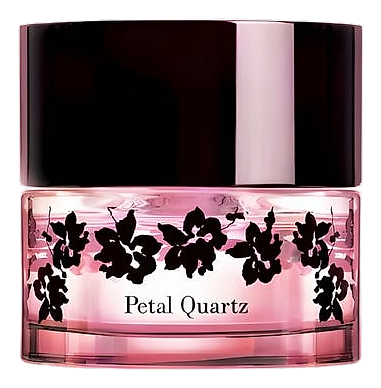
Bernard Ellena designed Petal Quartz for Oriflame in 2008, creating a rose-forward fragrance with an unconventional edge. The name itself is a statement, quartz is crystalline, precise, mineral. Petals are soft, organic, warm. The result sits at the intersection of cool and warm, a composition that doesn't choose sides when it doesn't have to.
What makes this work is the Artemisia. It's the unsung note in the heart, herbal, slightly bitter, nothing like the sweetness you'd expect from a rose fragrance. Ellena didn't hide the florals behind it. He let the rose and jasmine breathe while Artemisia kept the composition honest. Blackcurrant in the top adds a tartness most florals skip entirely. The base is warm without being heavy: musk, patchouli, amber, and vanilla orchid create a drydown that stays close to the skin rather than announcing itself across the room.
The evolution
The opening hits bright and cool, freesia leading, blackcurrant adding a brief tartness. Within minutes, the rose arrives and the composition shifts. This is where the Artemisia shows up. Not as a solo player, but as a counterweight, keeping the sweetness from becoming syrupy. Jasmine joins the heart, amplifying the floral without adding sugar. Musk and vanilla orchid emerge together, soft and warm, while patchouli adds just enough earth to ground everything. What remains is a quiet skin scent, the ghost of rose, the warmth of vanilla orchid, nothing loud, nothing trying.
Cultural impact
Petal Quartz stood apart from typical department store florals with its distinctive Artemisia note, an herbal counterpoint to the rose that set it apart from safer market choices. While still uncommon in mainstream fragrances, this ingredient continues to intrigue wearers who appreciate its complexity. It was never designed to please everyone, and that restraint is exactly why dedicated fans keep returning to it years after its release.