The Story
Why it exists.
The beginning
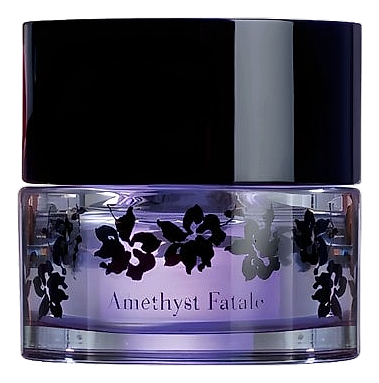
Amethyst Fatale arrived in 2007 as the opening statement of Oriflame's Gem Collection, a line that took its cues from precious stones and their symbolic weight. The name says everything: amethyst, the gem associated with clarity and inner strength; fatale, the French word for destiny, for the unavoidable. It was positioned as a fragrance for women who had arrived, not at a place, but at a version of themselves. Francis Kurkdjian, the nose behind countless modern classics, composed the structure alongside pianist Jean Jacques, who contributed the musical sensibility that Oriflame wanted to translate into scent. The collaboration made sense on paper: music and perfume are both built from notes, from rhythm, from the tension between what arrives early and what lingers longest.
What makes Amethyst Fatale work is the way its materials argue with each other and then reconcile. The top, pepper, rosewood, red berries, arrives with a certain sharpness, a spiced darkness that feels almost masculine in its first minutes. Then the heart opens: iris, rose, white sandalwood. The iris is the pivot point here, the note that takes the warmth and the spice and gives them somewhere powdery to settle. White sandalwood keeps the floral from becoming precious; the rose keeps the sandalwood from becoming too clean. It's a composition that understands restraint, the kind that takes confidence to build.
The evolution
The first hour is the argument: pepper and berries assert themselves, rosewood adds a woody sweetness that refuses to be ignored. Then the iris enters and changes the conversation entirely. What was sharp becomes powdery; what was dark becomes warm. The heart holds for two to three hours, a slow unfurling of rose and sandalwood that makes the wearer smell like a memory rather than a moment. The base is where Amethyst Fatale earns its reputation. Amber, patchouli, benzoin, musk, these are the materials that linger. That powdery iris stays close to the skin through the drydown, never quite fully leaving, the warmth just softens into something quieter. On some skin it holds for a full workday; on others it fades after a few hours. But it always leaves a trace.
Cultural impact
Amethyst Fatale found its audience among women who wanted something with presence but without pretense, a Chypre that felt modern rather than dated, opulent without being expensive-looking. The iris-and-amber pairing gave it a powdery warmth that reads as sophisticated and a little bit dangerous, the kind of fragrance that people comment on years after they've stopped wearing it. It's been discontinued, which only adds to its reputation: the people who still seek it out are the ones who found it once and never forgot it.