The Story
Why it exists.
The beginning
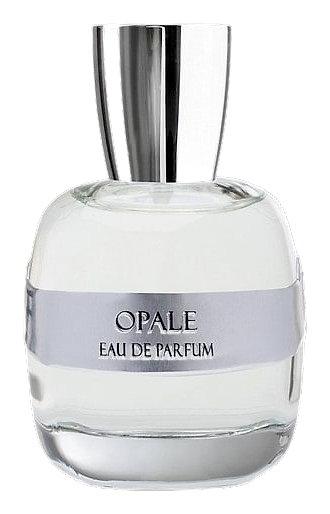
Fabrizio Tagliacarne has never been secretive about Opale's origin. He calls it his favourite among every fragrance he has created, and for a perfumer whose entire house is built on personal material reference, that declaration carries weight. The scent draws from Tagliacarne's own summers at his grandparents' summer residence on the French Riviera. Early mornings there, he recalls, carried a specific olfactory signature: wild sage growing close to the shoreline, the sea breeze pulling inland, salt in the air meeting the green cut of herbs. That singular morning combination, salt and green and warmth, became the brief for Opale. Rather than a literal coastal reconstruction, he translated the memory into a fragrance that moves from cool florals through a marine heart and arrives at a warm, powdery landing.
What makes Opale structurally unusual is its refusal to commit. Most marine fragrances open sharp and recede quickly, or they commit to sweetness and lose the water. Opale threads both through the heart: seagrass and African geranium keep the composition anchored in salt-green territory, while jasmine, waxy, indolic, warm, sits alongside it rather than against it. This is not a linear fragrance. It begins cool, becomes verdant, and finishes with the warmth of tonka and vanilla that almost disguises how long the marine accord has actually lasted. The result is a fragrance that smells complete at every stage rather than building toward a single climax and fading.
The evolution
The opening arrives cool and floral. Lilac and hawthorn give it a brightness that feels seasonal, spring flowers before the summer heat arrives. This initial phase carries a delicate freshness before the jasmine becomes more present and the marine accord begins to establish itself. As the fragrance develops, seagrass dominates. Salt-green and slightly kelp-dark, it does not feel like a generic aquatic. The African geranium keeps it from tipping into pure marine literalness, there is a green herbal quality that reads as the shore, not the pool. The drydown is where Opale earns its name. Bourbon vanilla and tonka bean arrive slowly, wrapping around cedar and patchouli, while white musk keeps everything close and skin-warm. This final phase, the powdery, slightly sweet, woody base, lingers beautifully on the skin.
Cultural impact
Among niche collectors, Opale occupies a distinctive position: a marine fragrance that refuses to stay purely marine. Where many aquatic fragrances offer a crisp, literal take on salt and sea, Opale adds a warm vanilla and powdery drydown that gives it unexpected depth and sensuality. This commitment to warmth alongside the marine is what distinguishes it in a category often populated by pure aquatics. The fragrance succeeds because it captures something truthful about the coast, an olfactory honesty that goes beyond stereotypical beach interpretations.