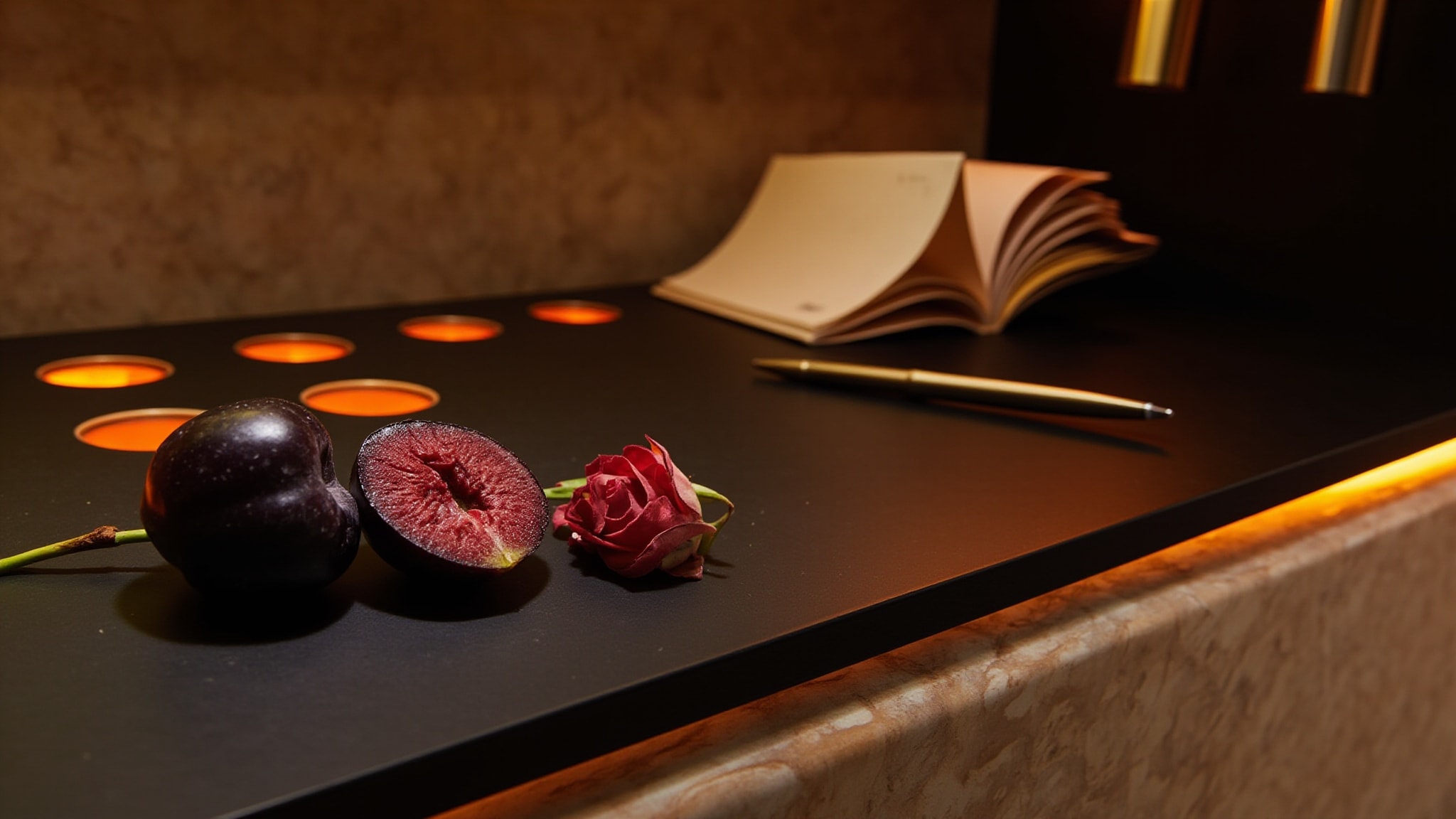
The Story
Why it exists.
The beginning
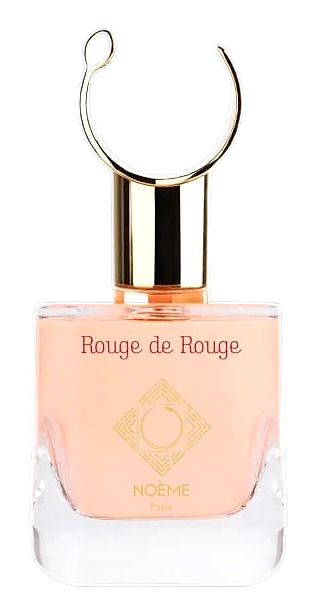
Rouge de Rouge arrived in 2025 as part of Noème's La Collection Riviera Fruitée. Perfumer Emna Doghri built the composition around fruit handled with real intent, the kind of approach that treats each note as a structural decision rather than an afterthought. Bergamot, blackcurrant, peach, and plum open the composition, four notes that could easily collapse into candy if handled without discipline. Doghri holds them in check by balancing the sweetness against Bulgarian rose and geranium in the heart, then anchoring everything to vetiver and Virginia cedar wood. The result is fruit in conversation with something drier and more architectural, the sweetness tempered by the kind of weight that keeps a composition upright.
The interesting choice here is restraint. Rouge de Rouge sits inside a gourmand-adjacent territory, the kind of fragrance where vanilla, tonka bean, and benzoin in the base could easily tip the whole thing into dessert. The composition avoids that drift by letting the rose-geranium pair do structural work in the middle, bridging the bright fruit and the warmer base. The result is a fragrance where each phase feeds the next, the fruit's tartness making the florals feel greener, the florals making the base feel less sweet than its ingredients might suggest on paper.
The evolution
On skin, Rouge de Rouge opens with a burst that feels almost chilled. Blackcurrant and plum hit first, sharp and just-ripe, with bergamot brightening the edges and peach softening the corners. Within ten minutes, the fruit recedes, not gone but quieter, and Bulgarian rose steps forward alongside geranium. The rose here isn't powdery or old-fashioned. It reads more like petals crushed between fingers, green and slightly alive. Vetiver and Virginia cedar wood thread underneath, giving the heart a grounded, almost dry quality that keeps the composition from floating away. By the two-hour mark, benzoin and tonka bean arrive, warm and resinous, and the vanilla settles in close to skin. The base settles into a soft amber haze, the fruit gone but the sweetness carrying something darker underneath it, a faint bitter edge that keeps it from collapsing into pure sugar.
Cultural impact
Rouge de Rouge makes a particular argument about fruit in fragrance, one that pushes back against the assumption that sweetness has to be a fleeting gesture. Where older compositions might have leaned on fruit for a brief opening before burying it under florals, this one keeps the fruit present through the mid-phase, giving the drydown a more layered resonance. The Bulgarian rose and geranium in the heart don't replace the opening fruit so much as extend it, translating the tartness into something greener and more floral before the base materials take over.