
The Story
Why it exists.
The beginning
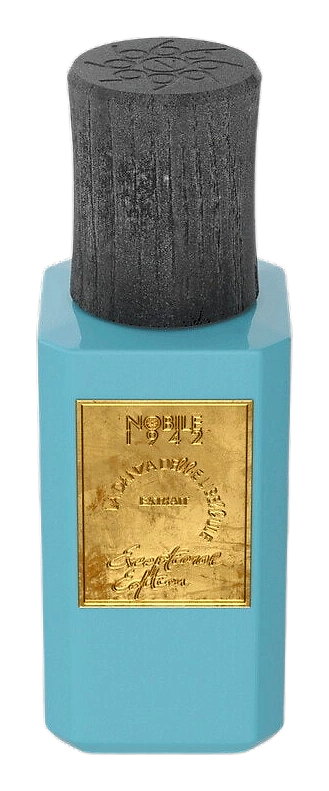
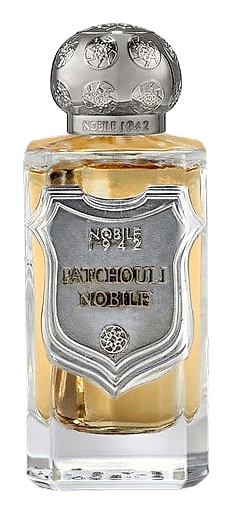
Patchouli Nobile presents patchouli as a material with history, its resinous depth, its smoky earthiness, its ability to hold space without announcing itself. The composition treats patchouli not as a supporting player or a base-note workhorse, but as the central element around which everything else organizes. The lemon brightness, the white pepper, the jasmine, each exists to give patchouli room to breathe, to shift, to settle into its full character. This isn't about trend or fashion. It's about material. The fragrance reaches for patchouli because the note offers something most others cannot: a complexity that rewards attention, a darkness that doesn't crowd the wearer but rather settles around them like a second skin.
Patchouli Nobile takes the structural approach further: the pyramid itself becomes the story. Patchouli appears twice in the composition. Heart and base. The first patchouli layer arrives with the heart: bold, youthful, still carrying the memory of the opening's smoke and citrus. The second appears in the base as the drydown: settled, refined, having shed its edges but not its character. The structure creates an arc. What opens as smoke and brightness transforms through warm woods and resin into something that breathes on its own.
The evolution
The opening announces itself with smoke. Incense arrives first, followed immediately by white pepper, a tactile note that seems to linger longer than the citrus. The lemon cuts through the darkness, but it doesn't last. Within the first hour, the brightness retreats and patchouli takes its place: earthy, resinous, almost mineral. French labdanum adds a warm, sticky quality; guaiac wood brings a faint sweetness beneath the earth. Jasmine appears briefly, a fleeting floral moment before dissolving into the overall warmth. By the time the base notes emerge, patchouli deepens and sandalwood with cedarwood begin to show, creamy and dry simultaneously. Tonka bean adds a soft sweetness that tempers the earthiness without making it dessert. Oakmoss keeps the drydown grounded, a reminder of where the fragrance came from. Smoke and wood remain, amber and tonka warming the skin.
Cultural impact
Patchouli Nobile occupies a particular position in niche fragrance discussions: it's often cited as an argument that patchouli doesn't need rehabilitation, that the material already possesses depth enough to carry a composition if given proper space. The fragrance treats patchouli as a classical material, letting it drive the pyramid rather than serve as background. The result has earned staying power, still in production, still discussed, still sought by those who want patchouli that earns its presence rather than claiming it.
The House
Nobile 1942Nobile 1942 is an Italian niche fragrance house based in Naples, founded around 2004-2005 by Massimo Nobile and his wife Stefania Giannino. The brand carries forward a family perfumery tradition dating back to 1942, when the Nobile family established their perfumery during wartime Italy. Now in its third generation, the house crafts small-batch fragrances that draw from classical Italian opera and theatrical traditions. Each fragrance carries an Italian title, reflecting the brand's commitment to expressing Italian cultural heritage through scent. The collection includes notable releases such as Profumo Imperiale (2010), Café Chantant Estratto (2012), and Il Capriccio del Maestro (2018), alongside several exceptional edition releases. Nobile 1942 positions itself as an alternative to mass-market fragrance production, emphasizing artisanal quality and familial continuity over commercial scale.
The Creator
Marie DuchêneMarie’s style leans toward naturalism, favoring botanical absolutes, fine woods, and delicate florals. She often begins with a single heart‑note—lavender, rose, or jasmine—then builds a supporting structure of citrus top notes and soft musks.