The Story
Why it exists.
The beginning
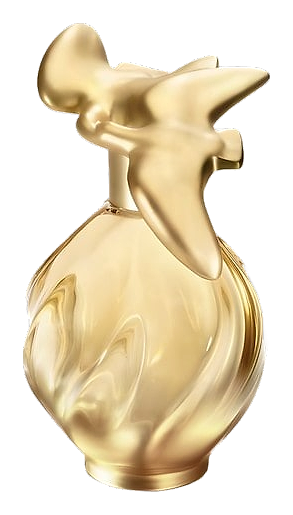
L'Air du Temps Eau Sublime arrived in 2016 as a limited edition flanker to Nina Ricci's 1948 icon. Calice Becker built it around a single idea: the warmth of skin in sunlight. Not beachy, not sunscreen, private. The kind of warmth that happens when you've been sitting still long enough to matter. It launched before the winter holidays, housed in the house's legendary Lalique bottle, this time dressed in gold paint. A small, intentional gesture, warmth captured in a flask.
What makes this composition work is the tension between yuzu and tuberose. Yuzu is cold, bright, almost astringent. Tuberose is lush, almost medicinal in its fullness. Calice Becker let them touch, not blend, not compete, and the space between them is where this fragrance lives. Carnation adds a clove-like warmth that keeps the florals from floating away. The musk base doesn't project; it anchors. By the time you've been wearing it for three hours, you've forgotten it's there. That's the point.
The evolution
The first five minutes are yuzu. Sharp, citrus, clean. Then the florals begin their slow arrival, carnation first, then white flowers, then tuberose asserting itself. By the thirty-minute mark, the yuzu has receded but not disappeared. It's the green undercurrent keeping the tuberose from being too much. The drydown is where this fragrance earns its name: skin-warm, close, present without projecting. On fabric, it lasts into the next day. On skin, count on eight to ten hours before the musk finally fades to something you'll catch occasionally, a reminder, not a declaration.
Cultural impact
As a limited edition flanker to a 1948 icon, L'Air du Temps Eau Sublime occupies a particular space: for those who love the original but want something more intimate. The gold-coated Lalique bottle signals occasion without announcing it. Wearers describe it as the scent of someone who doesn't need the room to know she's there.