The Story
Why it exists.
The beginning
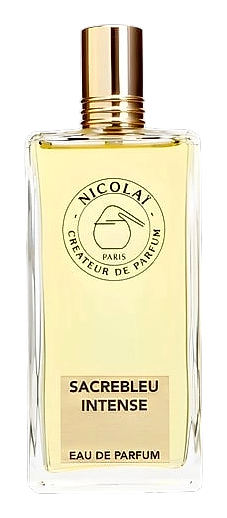
Patricia de Nicolai came from the Guerlain lineage and trained in the classical tradition, but she built her own house on one principle: complexity over trend. Sacrebleu Intense arrived in 2008 as a statement about structure, the kind of fragrance that unfolds with intention, not accident. The name itself is a French exclamation, theatrical by design. This was meant to be noticed.
What makes Sacrebleu Intense unusual is its architecture. The opening announces fruity sweetness with genuine charm, berries and mandarin that feel accessible and inviting. Then the heart takes over. Tuberose, jasmine, carnation, and cinnamon arrive in succession, each note asserting itself before the next arrives. The warm spice doesn't soften the florals; it amplifies them. The result is a fragrance with a distinct three-act structure, theatrical in its development, built for someone who wants a composition that moves rather than a scent that simply sits.
The evolution
The opening arrives bright and tart, mandarin and red berries, that quick burst of sweetness that announces itself before settling. For the first twenty minutes, it plays friendly. Then the heart arrives and the conversation changes. Carnation's spice threads through the jasmine and tuberose, which surge forward and take over the room. This is not a polite floral. Tuberose dominates here, creamy, slightly narcotic, unapologetically present. The warm spice doesn't wait for the drydown to arrive. Cinnamon weaves through the florals as they unfold, keeping the whole middle act in motion rather than letting it sit still. The base shifts the energy from theatrical to intimate. Vanilla and tonka bean take over, softened by Peru balsam's honeyed resin. The frankincense surfaces slowly, lending a quiet smoky quality that keeps the drydown close to skin rather than projecting outward.
Cultural impact
Sacrebleu Intense occupies a specific corner of niche perfumery, the classical oriental that rewards patience over instant impression. The composition pivots from fruity to spicy to woody, anchored by tuberose and vanilla, a structural boldness that's distinctly Nicolai. Its 2008 launch positioned it at the tail end of a niche boom, a period when independent houses were investing in compositions with real development ambition.