
The Story
Why it exists.
The beginning
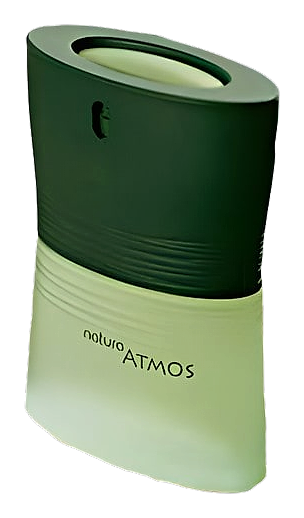
Alberto Morillas designed Atmos in 2005, his first collaboration with Natura, a Brazilian house built on botanical roots and fair-trade sourcing from the Amazon basin. The brief was straightforward: something that felt native to the brand's identity, rooted in nature, but could hold its own on the international stage. Morillas approached it the way he approaches most compositions, with an eye on the whole arc, not just the opening. The name Atmos suggested something atmospheric, ambient, the air itself. The fragrance needed to earn that word.
What makes Atmos structurally interesting is how deliberately it refuses to be defined by its opening. Green-citrus fragrances typically peak in the first twenty minutes and fade, Morillas built a drydown worth staying for. The vanilla-sandalwood base doesn't just support the top notes; it transforms them, turning the bright citrus into something powdery and warm as the hours pass. Mint and cardamom in the heart are doing quiet work, the mint keeps things cool and airy, while the cardamom adds a subtle spiced warmth that bridges the fresh opening to the musky, woody base. It's a composition that rewards patience, where the third act is genuinely different from the first.
The evolution
The first minutes belong to grapefruit and bergamot, sharp, clean, with a grass note that grounds the citrus in something slightly bitter and real. The mint arrives faster than expected, cooling the opening rather than waiting for a proper heart phase. Cardamom follows within the first hour, warm and quietly spiced. By the second hour, the citrus has receded and the musk begins to soften everything. The vanilla-sandalwood base announces itself gradually, powdery, warm, with the musk creating a skin-like quality that feels intimate rather than heavy. By hour three or four, Atmos has become something close and comfortable. It doesn't project far, but it lingers. The next morning, there's a faint trace on fabric, warm, clean, barely there.
Cultural impact
Atmos arrived in 2005, a period when men's fragrance leaned heavily toward aquatic and metallic accords. Its green-citrus powder profile stood apart, warmer and more tactile than the dominant trends. Wearers describe it as the scent of someone who walks into a room and doesn't need to announce themselves. It's earned a quiet longevity on skin and in memory, preferred by those who value intimacy over projection.