
The Story
Why it exists.
The beginning
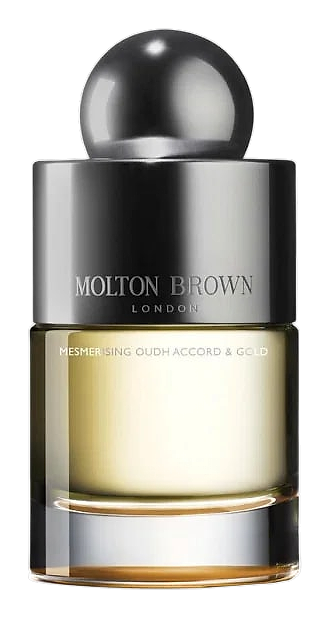
Philippe Bousseton composed this in 2015, ten years after Molton Brown had already cemented its place in British fragrance. The brief was clear enough: take the dense, resinous world of oud and strip away the heaviness that keeps most people away from it. What remained was a spiced corridor between East and West, bergamot and cinnamon warming the threshold, black tea and myrrh marking the depth. It became one of the house's defining scents, the one that proved Molton Brown could work in a register most British heritage houses avoided.
The smart move is in the restraint. Most oud compositions lean on the raw material's animalic edge, but Bousseton treats oud as one accent in a larger conversation rather than the entire monologue. Tobacco and honey round its angles. Elemi resin adds lift where the composition might otherwise sink. The result reads opulent without the dusty heaviness oud can carry, a practical translation of a material often treated as untouchable.
The evolution
The first ten minutes are a procession of warm spice, cinnamon leaf threading through bergamot and a dusting of nutmeg that has weight without aggression. It feels like walking into a room that's already lit, comfortable, and slightly older than you expected. Around the 30-minute mark, black tea arrives alongside the myrrh, and the composition takes a sharper turn, less aromatic, more meditative. The elemi resin keeps the heart from sinking into incense territory, adding a clean, peppery brightness that anchors the whole middle phase. By hour three, you're in the base territory that defines the fragrance: tobacco leaf, a drizzle of honey, and oud that finally shows its face, never sharp, never fecal, just dark and resinous. The vetiver underneath keeps things from going too sweet. On skin, it holds shape for 6 to 8 hours, settling into a close, warm trail. The next morning, a faint sweetness clings to clothing, honey and dried tobacco, the quietest memory of the night before.
Cultural impact
Mesmerising Oudh Accord & Gold sits in an unusual lane for a British heritage-adjacent house. It namechecks oud, the material most Western fragrance houses treated cautiously in 2015, and commits to it without the borrowed exoticism that diluted similar releases from other European brands. Wearers tend to be people who've already explored mainstream designer territory and want something with more gravity, without paying the entry fee for niche houses like Frédéric Malle or Parfums de Marly. It reads as composed, globally curious, and quietly confident, the kind of scent that suits someone whose taste is already formed and needs no explanation.