The Story
Why it exists.
The beginning
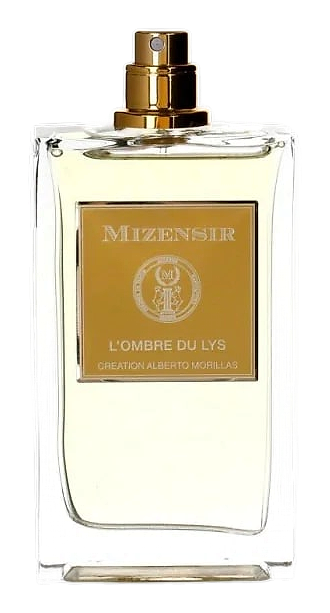
L'Ombre du Lys arrived in 2015 from Alberto Morillas, a perfumer whose hands have shaped some of the most recognizable modern florals. The composition is released under his private house, Mizensir, where this piece reaches for something airborne, an evocation of the lily's shadow rather than its bloom. The name itself gestures at the floral that isn't quite there, a suggestion built from neroli, orange blossom, and tuberose. It reads like an exercise in implication, building presence through what surrounds the absent flower, the way a photograph of a shadow tells you about the object blocking the light. Morillas works in that rare register where less becomes more, and L'Ombre du Lys is one of his quieter statements.
Neroli from Tunisia, orange blossom absolute, Indian tuberose absolute. The blend delivers a neroli-orange blossom hybrid threaded through with the dense creaminess of tuberose, fresh enough to register as green at the opening, rich enough to hold its shape through the drydown. Morillas has a gift for making white florals behave on skin, coaxing them away from the soapy or synthetic pitfalls that plague lesser compositions, and here the materials feel alive, almost sun-warmed.
The evolution
The first half hour belongs to neroli, that bitter-orange brightness spiked with hedione's clean, almost metallic transparency. It reads green and sharp, dewy, the way a garden smells after rain. The orange blossom absolute arrives early, lending a sunnier warmth that softens the edges and rounds out the sharper citrus facets with a touch of honeyed floral. By the second hour, Indian tuberose absolute takes over, dense and waxy, a creamy weight that anchors the composition and pulls the airy top notes back down to skin level. The white musk arrives last, a skin-warm haze that pulls the sandalwood close. The Ceylonese sandalwood itself stays creamy and faint, more texture than statement, a velvety underpinning rather than a featured player. What clings to fabric in the hours after application is that same warm musk, carrying faint traces of the florals that preceded it.
Cultural impact
L'Ombre du Lys finds its place among white floral compositions that prize suggestion over declaration. The neroli-orange blossom-tuberose axis it occupies is well-trodden in fragrance history, but Morillas handles the materials with a particular restraint, letting each note breathe without crowding the others. The composition feels at home in the same general territory as classical eaux and soliflores that emphasize the quiet beauty of natural florals rather than amplified sweetness or synthetic brightness. For wearers drawn to neroli-heavy fragrances, this one offers something with more body and dimensionality than a straightforward cologne.