
The Story
Why it exists.
The beginning
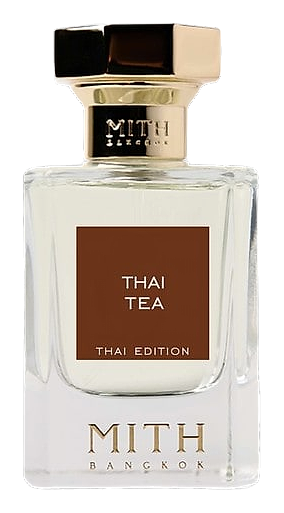
MITH approached Thai Tea as a study of Thailand's most beloved beverage, not a recreation, but a translation. Perfumer Christian Carbonnel, known as Chris Maurice, took the concept and stripped it to what matters: the citrus brightness that opens, the warmth of spice that settles, the sweetness that lingers. Bergamot, orange, and cardamom arrive first, a market in sunlight. Star anise and tea form the heart. Brown sugar and vanilla close it out. The result is something MITH calls skin-close: a fragrance that doesn't announce itself but stays with you.
The combination of star anise and tea in the heart is what makes Thai Tea work. Not the tea note alone, the anise that comes with it. That slightly medicinal, quietly spiced quality transforms a simple tea concept into something with more depth. Brown sugar and vanilla in the base do the heavy lifting on longevity, creating a sweet warmth that holds through evening without ever becoming loud. It's the kind of composition that rewards someone who smells it on you and leans in to figure out what it is.
The evolution
The first thirty minutes are all citrus, bergamot and orange cutting bright against the skin. Cardamom arrives within minutes, warming the whole thing. By the second hour, star anise and tea take over. That's the moment Thai Tea becomes itself. The brown sugar adds a sticky-sweet edge without overwhelming the spice. The base deepens: sandalwood, musk, vanilla. Skin-close, not room-filling. As the hours pass, what remains is a quiet sweetness on skin, brown sugar, vanilla, a hint of sandalwood. Not loud. Just there. Like the scent of a room someone was in, not the one they're still in.
Cultural impact
Thai Tea by MITH is a fragrance that works close to the skin, making it a personal rather than performative choice. The star anise and tea heart create a distinctive character among tea-forward releases, one that leans into spiced warmth rather than green or astringent notes. Moderate sillage means it suits intimate settings without projecting across larger spaces. The composition draws from cultural beverage traditions, approaching the concept through sensory memory rather than as a novelty. What emerges is a fragrance that feels familiar yet specific, rooted in something recognizable while remaining distinctly crafted.