
The Story
Why it exists.
The beginning
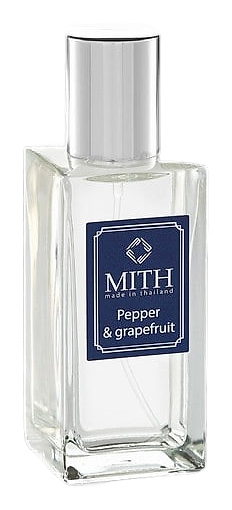
Pepper & Grapefruit comes from MITH, a house whose catalogue orbits a small set of recurring obsessions: skin-close compositions, green aromatic textures, and the kind of citrus work that doesn't announce itself from across a room. The brand has positioned itself within niche perfumery by leaning into quieter narratives, favoring compositions that whisper rather than project, and this particular release sits squarely inside that logic. It's a citrus-spicy-green composition built for proximity rather than spectacle, the sort of scent you catch on someone's jacket rather than smell before they turn the corner.
The composition's real risk is the pistachio. It sits in the base alongside cedar, juniper berries, and musk, an unusual anchor for a citrus-spicy opening. Pistachio in fragrance often signals gourmand territory, but here it does something different: it softens the green bite of fig leaf and cypress in the heart, giving the drydown a creamy, almost nutty warmth that keeps the whole thing from feeling like just another eau de cologne.
The evolution
The opening reads as a citrus argument. Mandarin, bergamot, lemon, and grapefruit push forward together while pink pepper cracks behind them, adding a dry heat that makes the brightness feel intentional rather than accidental. That top accord arrives with real lift, the kind of sharp, almost bitter citrus snap that announces the composition's intentions immediately. Pink pepper doesn't sit politely in the background; it cuts across the citrus with a smoky, almost peppercorn-like dryness, the kind of contrast that keeps the brightness from reading as straightforward freshness. As the opening settles, orange blossom and fig leaf begin to take over, and the scent shifts into something greener and more private, less cologne, more skin. Cypress sharpens the edges here, giving the heart a herbal, slightly resinous quality that feels closer to crushed leaves than flowers.
Cultural impact
Pepper & Grapefruit occupies an interesting place in the broader landscape of citrus fragrances. Rather than aiming for the bright, crowd-pleasing eau de cologne territory that dominates the category, it leans into greener, more aromatic territory, the kind of composition that treats citrus as a starting point rather than the whole story. Its discontinuation has made existing bottles harder to find, and the limited remaining stock reads as a quiet final chapter for a release that never fully broke into wider circulation.