The Story
Why it exists.
The beginning
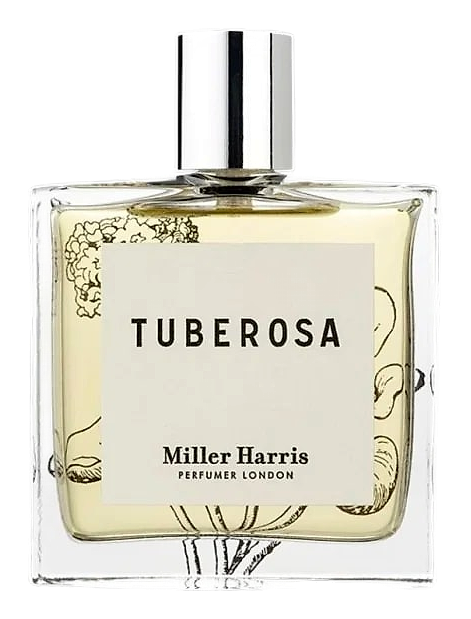
Tuberosa is one of the cornerstones of Miller Harris's Perfumer's Library series, a collection the brand built over years before its 2013 debut. According to the brand, this particular composition dates back to 1998, long before the house had a public-facing catalogue to house it. Lyn Harris treats perfume as a vehicle for narrative, a philosophy that runs through every release under her name. Tuberosa was her study in a single flower, the way a poet might spend a decade on one sonnet. The fragrance opens with a green, almost vegetal sharpness, a quality that catches you off guard before the white petals unfold. From there, tuberose takes the center in full, unapologetic form, creamy, dense, and faintly indolic, the kind of blossom scent that feels alive on skin.
What makes this composition worth slowing down for is the way it refuses the usual tuberose script. The flower itself is notorious for its indolic, almost carnal character, the kind of white-floral intensity that overwhelms lighter compositions. Here, Lyn Harris opens with salicylate, a synthetic note often associated with pharmaceutical coolness and clean linen. That cool counterweight is what keeps the tuberose from tipping into opulence. The orange blossom and jasmine sambac in the heart layer in supporting florals without crowding the star. The base of Siam benzoin and musk adds a resinous sweetness that grounds the whole thing in warmth.
The evolution
The first 15 minutes are where salicylate does its work. There's a clean, almost clinical lift at the top, like a cold room warming up. Then the salicylate recedes and the tuberose takes over, but not in the way you expect. It doesn't go heady or funereal. It opens sweet and almost fruity, somewhere between peach skin and crushed stems, the green accord pulling the flower away from its heavier reputation. Around the 45-minute mark, the jasmine sambac slides in alongside orange blossom, and the composition gains a soft, rounded center. It feels fuller now, creamier. The salicylate is still detectable, but as a brightness rather than a sharpness. By hour three, the florals have mostly exhaled. What's left is benzoin doing its quiet work, a vanilla-adjacent warmth that reads as skin rather than perfume. The musk underneath keeps it close to the body but not vanishing. On fabric the next morning, a faint trace of benzoin sweetness lingers, like the memory of perfume on a scarf you forgot to wash.
Cultural impact
Tuberosa arrived as part of the 2013 Perfumer's Library debut, a series that introduced several of the brand's most personal compositions to a wider audience. The fragrance's modern treatment of tuberose, a flower that often gets trapped in vintage or oriental contexts, stands out for its clarity and restraint. There is no heavy base anchoring the bloom to old-fashioned territory; instead, the composition lets the flower breathe, opening with a sharp green note that almost reads like crushed stems before the petals fully unfurl.