
The Story
Why it exists.
The beginning
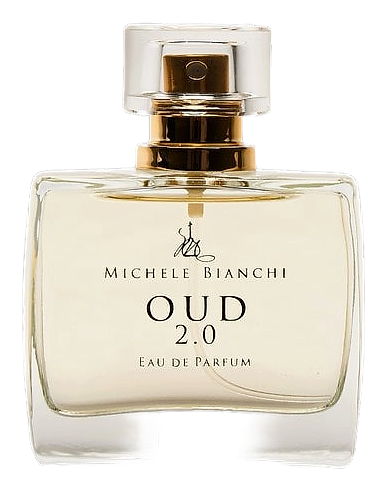
Oud 2.0 arrived as Michele Bianchi's statement on agarwood, a material so loaded with expectation that most bottles open already armored in smoke and seriousness. Bianchi's instinct was to let the oud earn its reputation on skin rather than in marketing copy, and the name carries that intent almost like a wink. The composition rewires the genre's usual structure around contrast, placing bitter orange peel at the threshold and letting the agarwood rise from underneath rather than announcing itself at the door. It reads as a deliberate refusal of one-note heaviness, dressed up as a versioning exercise for anyone paying attention to the label.
The interesting choice is what the citrus does to the oud, not what the oud does to the citrus. Bitter orange carries enough bitterness and pith to hold its own against agarwood's medicinal weight, which means the saffron and rose in the heart don't have to compensate for a flat top. This one keeps the air moving through the composition until the leather and patchouli arrive in the base. The animalic undertone is not a separate ingredient so much as the natural friction between materials in the blend, a rubbing that produces heat without producing sweetness.
The evolution
The first thirty minutes belong to the bitter orange, and it behaves more like a peel than a juice: dry, slightly herbal, with a pithy bitterness that cools the skin rather than warming it. Around the forty-five minute mark the saffron threads through, bringing a quiet spiciness that reads more as texture than temperature. By the two-hour mark the rose and agarwood have settled into the center, and the composition takes on a grainy, almost suede quality. The leather arrives last, around hour four, and it is not a polished leather so much as something rougher and more lived-in. Patchouli and amber anchor the close, and on the drydown the fragrance fades into a faint dusty warmth that lingers on fabric the next morning. Nothing about this composition peaks. It accumulates.
Cultural impact
Oud 2.0 sits in an interesting corner of the niche conversation, structured with enough citrus lift to read modern while still feeling familiar to anyone who knows agarwood. Wearers tend to describe it as a gateway oud, the fragrance you reach for when the material appeals but heavier, smokier interpretations feel like too much commitment. Community ratings across platforms reflect solid approval, with longevity noted as a strength. The composition does not try to dominate a room or announce the wearer's taste from across a table.