The Story
Why it exists.
The beginning
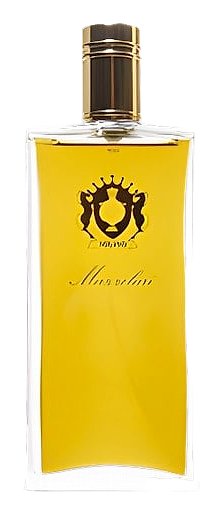
Lei means "her" in Italian. That one word does the work of a full concept here, because this composition was never trying to appeal to everyone. It's a fragrance that knows its audience, and the audience has always been narrow by design. From the Mazzolari house, Lei is part of a paired release alongside Lui. The Lui/Lei structure isn't a marketing gimmick; it's a statement that the brand understands masculine and feminine as gestures rather than rigid categories. Lei takes the patchouli-forward architecture and leans it toward something warmer, sweeter, and more wrapped-in-cashmere. Where Lui stands more austere, more mineral, more dry, Lei softens the edges without losing the underlying seriousness.
What makes Lei interesting isn't the note list, it's the proportions. The patchouli in the heart isn't a background hum; it's the structural beam, the thing everything else rests against. Around it, cocoa and laudanum do the heavy lifting for warmth, with vanilla adding a soft roundness that keeps the composition from turning austere. The way these materials interact is what separates Lei from the patchouli fragrances that came before and after it in the broader landscape.
The evolution
First 15 minutes, the Calabrian bergamot and lemon are doing their job: bright, slightly bitter, citrus that announces itself without shouting. There's a knowing quality to it, like an opening line that's been rehearsed just enough to sound spontaneous. The lemon cuts clean beneath the more complex citrus top notes, creating a tension between brightness and sharpness. Then the handoff. The patchouli arrives, and it doesn't sneak in. It walks in carrying the cocoa and laudanum, and suddenly the citrus is a memory. The transition isn't gentle; it's a deliberate shift in register, the composition deciding what kind of fragrance it wants to be. The heart phase is where Lei earns its reputation: dense, warm, sweet without being tooth-achingly so. The laudanum gives it that boozy, resinous undertone that makes the composition feel like it was stirred rather than sprayed.
Cultural impact
Lei sits in interesting company. Wearers and reviewers have drawn parallels to Guerlain's Shalimar and Thierry Mugler's Angel, which tells you something about the territory: oriental, gourmand-adjacent, unapologetically sweet, and built to last. But Lei isn't derivative of either. It occupies a space of its own, one where the gourmand warmth meets a more serious, almost brooding patchouli foundation. This is a fragrance for someone who already knows they like orientals and wants something that takes the category seriously without dressing it up in unnecessary complexity.