The Story
Why it exists.
The beginning
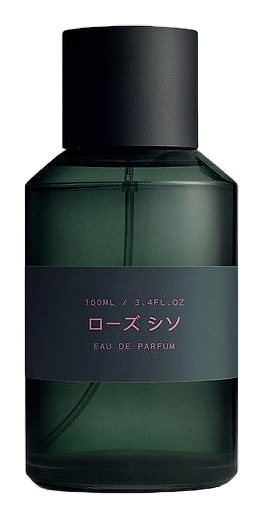
Rose Shiso came from a single question: what if the rose didn't want to be pretty? Alexis Dadier, working from Grasse with access to the Maubert family's ingredient network, built this around a tension between the Bulgarian and Turkish rose at its core and the sharp, green bite of Japanese shiso, the perilla leaf that appears at every Japanese table, placed under fish or wrapped around sushi. The name is literal. The shiso isn't decorative. It arrives first and it stays, cutting through the rose's sweetness like a leaf pressed between the pages of a book. Magnolia bridges the opening and heart, a waxy creaminess that most fragrances skip entirely. The 2024 launch was an exclusive for Japan, though the composition travels easily, green and floral at once, rooted in French tradition but speaking Japanese.
What makes this unusual isn't the rose, it's the refusal to let rose win. Most rose fragrances build around a central sweetness that everything supports. Here, shiso arrives as an interrupt. Bulgarian rose opens, shiso follows, and the two spend the next hour negotiating space. Magnolia enters as a mediator, its waxy floral character softening the herbaceous edge without erasing it. The heart brings Provençal Rosa centifolia alongside iris, a powdery, dusty rose that feels less like a garden and more like rose petals pressed in a book. Cedar appears in both heart and base, extending a dry woody thread through the entire composition. Sandalwood from Nepal anchors the drydown with cream and warmth.
The evolution
Shiso hits first. Bright, herbaceous, almost medicinal, the smell of a leaf crushed between thumb and forefinger. It doesn't apologize for being green. The Bulgarian rose arrives within seconds, but it arrives fighting, not surrendering. Magnolia opens after a minute or two, bringing a waxy creaminess that softens the edge without removing it. The rose reads differently now, still present, but shaped by the herb rather than the other way around. The heart phase belongs to Rosa centifolia and iris together. This is where the fragrance becomes rose and powder in equal measure. The iris adds a dusty quality that makes the rose feel less romantic, more considered. Cedar is already here, dry and woody, providing architecture. The base arrives slowly, sandalwood first, with its quiet cream, then cedar asserting itself alongside the Bulgarian rose that has somehow survived the journey.
Cultural impact
Rose Shiso arrived as an exclusive for Japan, reflecting Marie Jeanne's access to global ingredient networks through the Maubert family's Robertet operations. The combination of French rose tradition and Japanese shiso creates something that exists comfortably between cultural reference points. Rose and shiso together suggest an intentional bridging, though the fragrance itself makes no explicit claim about what it represents. It simply offers both, without apology.