The Story
Why it exists.
The beginning
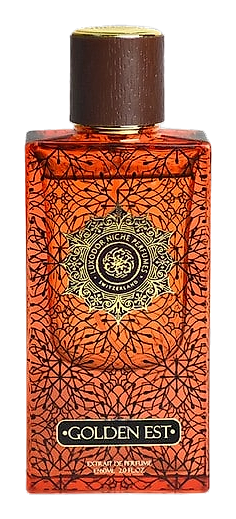
Golden Est is a finished fragrance from Luxodor, a house whose name surfaces in connection with Swiss fragrance oils distributed across the Middle East, Europe and Southeast Asia. With Golden Est, released in 2020, the house offered a composition that leads with warmth as its central idea. The fragrance positions itself in the oriental-floral category, but the dominant impression on skin reads more golden than dark, sun-warmed rather than resinous, with a soft luminescence rather than heavy incense. At the heart of the bottle sits tuberose, treated as a protagonist rather than a supporting player.
The composition leads with tuberose at the top rather than burying it under fruit or citrus. Tuberose is a notoriously demanding material, green and honeyed in equal measure, with an animalic undertone that can read cheap if not handled carefully. The placement of ylang-ylang alongside it at the opening deepens that honey quality without flattening it. Then the heart introduces cashmere wood, a dry and slightly sweet accord with a suede-like softness, and orange blossom, which brings a sharp sunlit brightness to cut through the cream.
The evolution
The first thirty minutes belong almost entirely to the florals. Tuberose arrives loud, creamy, almost edible, with ylang-ylang turning up the volume on its banana-skin sweetness. There's a green edge underneath, the living-plant smell of stems and leaves, and it takes about twenty minutes for that sharpness to blunt. Then the cashmere wood and orange blossom move in. This is the softest phase. The scent loses its floral intensity and reads almost powdery, like warm fabric against skin, with just enough of the orange blossom's solar brightness to keep it from going matte. Around the two-hour mark, the base starts pulling weight. Sandalwood arrives in that dry, slightly bitter way fine sandalwood reads, and the vanilla underneath is more about density than sweetness.
Cultural impact
Golden Est, released by Luxodor in 2020, brings tuberose and ylang-ylang together in a composition that leans fully into the characterful, indolic territory of white-floral perfumery. The pairing treats tuberose as a central figure rather than a quiet backdrop, allowing its creamy, honey-edged, slightly animalic qualities to carry through from the opening into the heart. Ylang-ylang amplifies the tropical sweetness, while cashmere wood adds a dry, suede-like softness that keeps the florals from becoming overpowering.