The Story
Why it exists.
The beginning
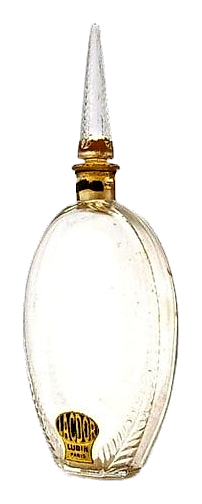
Lacdor arrived in 1920 from the house of Lubin, one of the oldest perfume houses in France, with roots reaching back to the Napoleonic era. The bottle was designed by Marc Lalique, which tells you something about how Lubin thought about this one. Lacdor wasn't meant to sit on a shelf. It was meant to be an object, a gesture, a portrait. The composition reads as cool, powdered, composed. It feels less like a new release and more like a refusal to participate. A scent for someone who had already decided who she was. There's a stillness at the center of it that the decade around it wasn't particularly interested in, and that contrast is part of what gives the fragrance its particular gravity.
What makes Lacdor interesting structurally is what it chooses to hold back. The opening has a brightness to it, almost metallic, the kind of lift that makes you check whether you've over-applied. You haven't. It just announces itself. The composition never tips into territory that feels obvious or expected, never crosses the line into comfort. The warmth that eventually arrives is slow, closer to skin temperature than to anything gourmand, which keeps the whole thing in a state of elegant tension rather than resolving into something easy. There's an architectural quality to how it's built.
The evolution
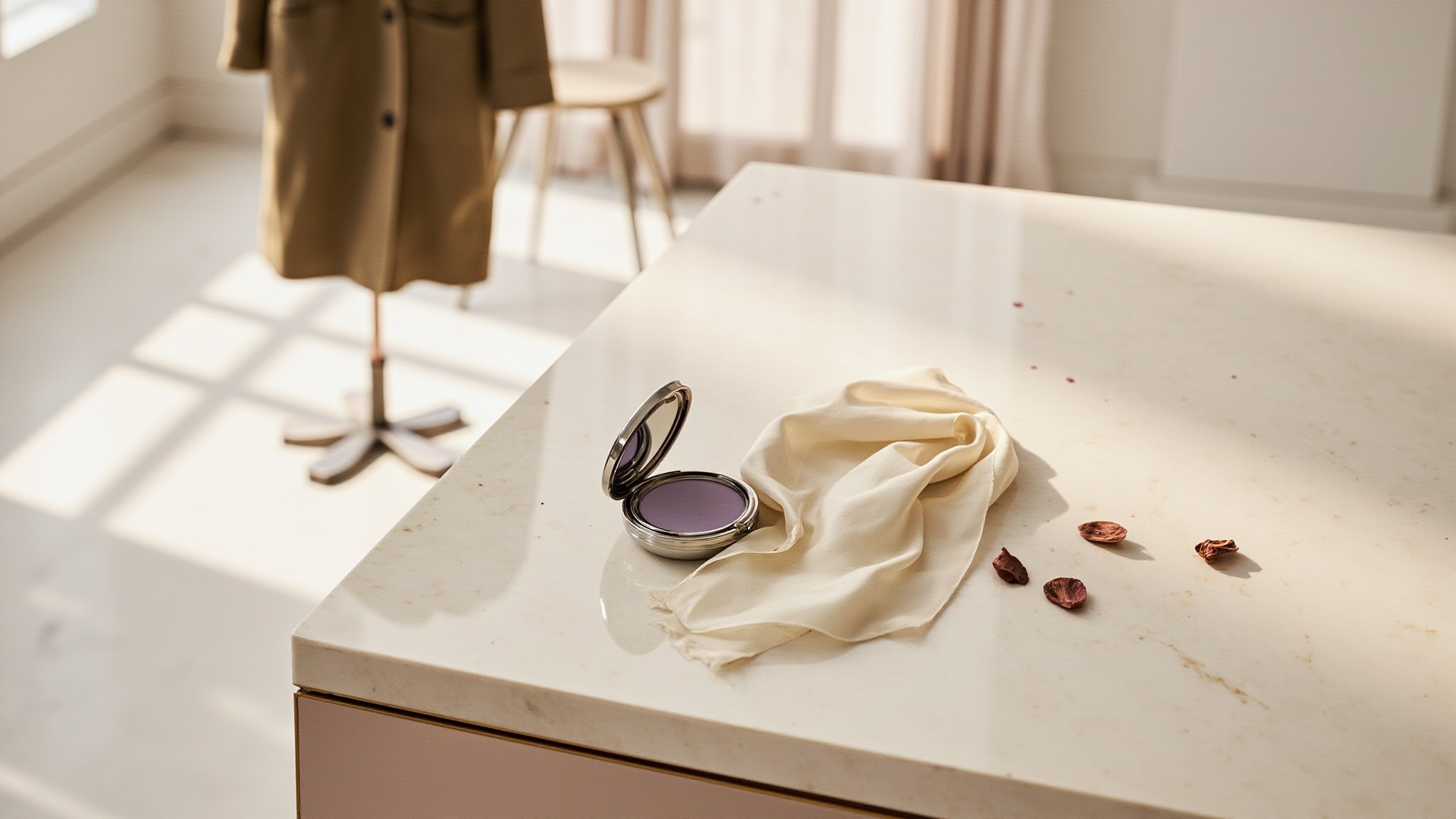
The opening is sharp. It lifts off the skin with a brightness that feels almost metallic, the kind of first impression that makes you check whether you've over-applied. You haven't. It just announces itself. The drydown that follows is something else entirely, drier, almost mineral, with a cool powderiness that recalls face powder in a compact that's been sitting in a drawer for decades. The composition shifts gradually as it wears. The brightness recedes and the heart rounds out, warming into a soft base that feels closer to skin than to bottle. What's left on your collar after hours is quieter than what you put on. A pale trace of powder, something vaguely floral, and a warmth that reads as human rather than perfumed. On fabric, the trace lingers in a way that feels almost ghostly, like a memory someone left behind.
Cultural impact
Lacdor is one of those 1920s French compositions that never quite crossed into mass recognition, and that obscurity has become part of its appeal. It exists slightly outside the canon, known to collectors and the deeply curious rather than to anyone who has wandered into a department store. That relative invisibility is part of what makes it interesting now. It wears its powder quietly, without the obvious signaling that marks so many fragrances from the period. This is a scent that hasn't been flattened by nostalgia because it was never flattened by fame in the first place. A whisper from the 1920s that didn't shout, and still doesn't.