Marc Lalique
Marc Lalique was born into one of France's most storied artistic dynasties, the son of René Lalique, the jeweler and glassmaker whose name became synonymous with Art Deco elegance. After studying at the École des Arts Décoratifs in Paris, Marc joined his father in the family business in 1922, beginning a career that would carry the Lalique legacy into the mid-twentieth century. While René had built the house's reputation on intricate jewelry and pioneering glasswork, Marc brought a technical precision to the craft, refining production methods and pushing the firm toward crystal as its signature medium. Under his direction, Lalique expanded its fragrance ambitions significantly. He recognized that scent and vessel were inseparable, treating each perfume bottle as a sculptural object worthy of display long after the liquid inside had gone. This conviction shaped the house's identity for decades, establishing Lalique as a maison where perfumery and decorative arts share equal billing. He presided over the company through the postwar years, guiding it toward broader commercial reach while preserving the artisanal sensibility his father had instilled.
The hits
Notable creations
The signature
How Marc composes
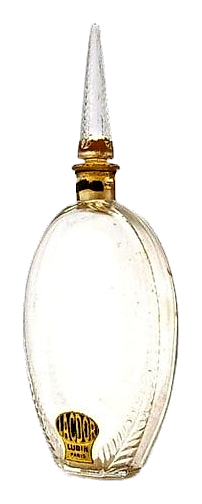
The Lalique fragrance aesthetic under Marc's tenure leaned floral, with an emphasis on classical femininity and compositions designed to flatter rather than challenge. The house gravitated toward compositions built around rose, iris, and white florals, often accented with gourmand or powdery elements that gave the resulting scents a warm, approachable character. Bottles during this period tended toward the architectural. Marc favored clean, geometric forms executed in crystal or pressed glass, with faceted stoppers and substantial weight. The visual language moved away from the ornate Art Nouveau curves of René's early work toward a more restrained, structured silhouette that suited postwar tastes. Scent profiles matched this restraint. Lalique's offerings rarely shouted. They presented themselves as polished, elegant, and unmistakably French, compositions that felt at home in a boudoir or on a vanity. The gourmand flourishes, think honey, vanilla, soft fruits, added dimension without tipping into anything too modern or strident. It was perfumery that knew exactly what it wanted to be.
Philosophy
What drives Marc
Marc Lalique inherited a singular point of view from his father: a perfume bottle should never be an afterthought. He approached fragrance as a complete artistic proposition, where glass, stopper, and scent together form a unified object. The bottle exists to hint at what lies inside, to give the olfactory experience a body before the first spray. This philosophy meant treating the flacon as sculpture first and container second. Each commission demanded its own form, its own material logic, its own reason for existing. Marc believed in the marriage of craft traditions, that a house known for crystal could not outsource its nose to generic formulas. The result was a catalog of fragrances built around distinctive vessels, pieces collectors prize as much for the glass as for what's inside. He also understood legacy as a living thing. Rather than freeze his father's aesthetic in amber, Marc modernized production, broadened distribution, and kept Lalique relevant through changing decades without sacrificing the hand-finished sensibility that defined the house.
The houses
Maisons Marc composes for
In the same league