
The Story
Why it exists.
The beginning
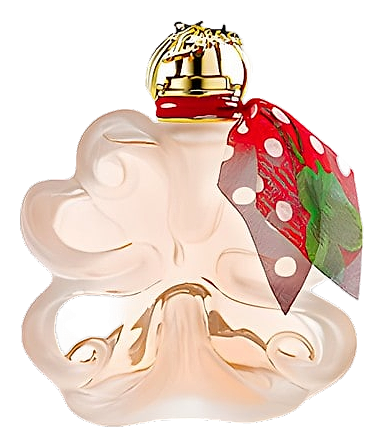
Si Lolita arrived in 2011 as the lighter counterpart to the 2009 EDP, Lolita Lempicka's answer to anyone who wanted the house's signature sweet pea note without the powdery weight. The brand had already established its unconventional olfactory identity with the original Si Lolita, built around an unusual floral-herbal combination that divided opinion in the best way. This EDT was conceived for warmer months and softer moments, retaining the composition's core personality while opening up the structure. The bottle kept its apple silhouette, the house's most recognizable shape, but swapped the white bow for a red one scattered with white spots, marking the transition from intimate to inviting.
What makes Si Lolita EDT interesting is the sweet pea. It's not a common fragrance material, it reads as vaguely floral, slightly green, with an almost powdery undertone that most perfumers avoid. Here, it's paired with pink pepper (the clean, bright kind, not the hot kind) and hawthorn (a delicate floral with bitter-honey facets) to create something that smells expensive and odd in equal measure. The magnolia adds cream without sweetness. The petitgrain keeps the top green and citrus-bitter. It's a composition that smells like it was made by someone who knew exactly what they were doing and didn't care if you agreed.
The evolution
The opening hits bright and tart, petitgrain and cranberry giving a quick citrus bite before pink pepper arrives to smooth everything out. That pepper doesn't burn; it clarifies. For the first hour, there's a clean green-floral tension, sweet pea and magnolia pushing against the top notes' sharpness. Then the heart settles. Hawthorn and sweet pea blend into something that smells like a specific memory, not identifiable, but familiar. The base builds slowly. Musk first, close and warm. Then iris, dry and powdery. Amber arrives last, anchoring everything into a finish that stays intimate and close. On most skin, expect 6-8 hours. The sillage is moderate, people standing next to you will notice, people across the room won't.
Cultural impact
Si Lolita EDT arrived in 2011 as part of a broader movement in feminine perfumery that questioned whether 'feminine' had to mean powdery aldehydes or heavy florals. The original Si Lolita EDP from 2009 had polarized opinion with its anise-forward sweetness, and the EDT took a different approach, stripping back the heavy patchouli and spices while keeping the unconventional sweet pea note that made the line distinctive. In the early 2010s, when florals were experiencing a renaissance and designers were reimagining what girlishness could smell like, Si Lolita EDT offered a cleaner, greener interpretation that felt modern without abandoning warmth.