
The Story
Why it exists.
The beginning
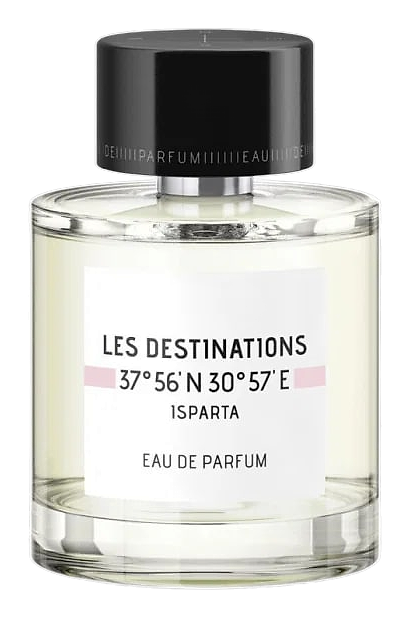
Isparta is named after a city in southwestern Turkey, located at roughly 37°56′N 30°57′E, a region long associated with the Turkish Damask rose. Sidonie Grandperret composed the fragrance, choosing to frame Turkish Damask rose as a lead voice in a fuller composition rather than a solo statement. The result reads less as a soliflore and more as rose in context, with raspberry and pink pepper acting as the bright companions that give the flower a freshly picked quality. The Turkish Damask rose carries a particular depth, slightly sweet, with a leafy undertone that distinguishes it from other rose cultivars, and that character threads through the entire composition.
What makes the composition interesting is the decision to pair Turkish Damask rose with Moroccan rose absolute in the heart. Two rose expressions layered together, each bringing its own texture, create a fuller floral dimension without depending on heavier materials. The cashmere wood note adds a soft, almost tactile warmth that bridges the floral heart to the vetiver and amber below. Pink pepper opens with a clean heat that reads as lifted and slightly metallic, a bright counterpoint to the softer notes around it.
The evolution
The first 15 minutes belong to the raspberry and pink pepper, bright and slightly tart, the kind of fruity opening that announces itself before you've even lifted your wrist. Rose enters quickly, threading through the fruit rather than overpowering it, and within 30 minutes the peony and cashmere wood have settled in to soften the edges. The heart phase, roughly the 1-3 hour mark, is where both roses do their real work. Turkish Damask brings the dewy, honeyed quality while Moroccan rose absolute deepens the texture into something richer and warmer. Blackberry is barely perceptible here, more suggestion than statement, adding a faint jamminess that ties into the raspberry opening. Around hour 4, the base takes over. Vetiver arrives first, dry and slightly green, grounding the floral that came before. Then amber and a clean musk settle in, warm and skin-like, carrying the last traces of rose into something quieter and more intimate.
Cultural impact
Isparta belongs to a wave of contemporary rose compositions that prioritize brightness and approachability over the heavier, more opulent constructions of earlier decades. The raspberry-pepper opening and the dual Turkish and Moroccan rose heart give it a distinct identity, one that feels rooted in a specific place rather than chasing abstract notions of luxury. The Les Destinations concept of naming each fragrance after a locale and printing coordinates on the bottle adds a documentary quality to the experience, treating scent as a record of somewhere rather than simply an accessory.