The Story
Why it exists.
The beginning
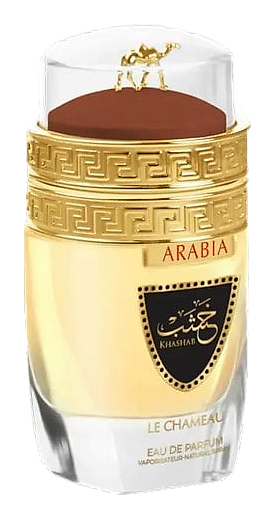
Arabia Khashab arrived in 2024 as part of Le Chameau's expanding Arabia collection, a line that draws on Middle Eastern olfactory traditions. The composition leads with leather and papyrus stacked at the top, raw and dry, the kind of opening that announces itself before you've moved your wrist. Sandalwood slides in alongside them, rounding the edges just enough to keep the opening from feeling brittle. Then the structure shifts: cedar and violet arrive to give the whole thing form, pulling the heavier materials into something more legible. It's a scent that respects its components, treating each note like a material with its own grain and weight.
The note placement here does real work. Leather and papyrus sit at the top together, and sandalwood joins them, softening the leathery dryness into something creamier, almost suede-like in feel. The whole opening has a weight to it, but it never tips into austerity because the sandalwood keeps things supple. Then violet enters and changes the temperature. It lifts the composition, sweetens without sugar, and adds a powdery, almost human quality that softens everything around it.
The evolution
The first 30 minutes belong to leather, unmistakable and close, sitting on papyrus like ink on rough paper. Sandalwood softens the edges, stops the opening from feeling cold. By the one-hour mark the leather has stepped back, and the violet arrives, not as a floral statement but as a dusting, the way orris and violet leaf can do when they're being polite. Virginia cedar sharpens the middle phase into something almost architectural. The drydown settles into a skin-like warmth: amber and cardamom warming into iris, the whole composition pulling close to the body, lasting well into the evening. On fabric the next morning, what's left is amber and the ghost of sandalwood, a soft residual that holds its shape without demanding attention.
Cultural impact
Arabia Khashab sits within Le Chameau's Arabia line, a series rooted in Middle Eastern fragrance traditions. Its leathery, papyrus-forward profile gives it a distinct character among Arabian-inspired compositions, appealing to wearers drawn to woody richness and structural, material-driven scents. Among community reviewers it trends toward fall and winter wear, with early feedback noting its dry, woody character and the way it holds its shape in cooler air.