
The Story
Why it exists.
The beginning
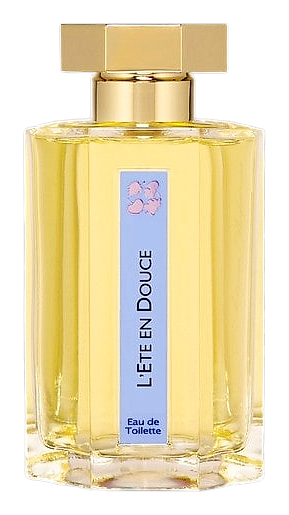
L'Ete en Douce began as Extrait de Songe, essence of a dream, a limited summer edition released in 2005. Olivia Giacobetti crafted it with a specific intent: to bottle the feeling of a warm afternoon that refuses to end. The name itself hints at something unfinished, a fleeting thought. Then came the trademark dispute with Annick Goutal, forcing a rename that shifted the fragrance's identity from something more abstract to something gentler, L'Ete en Douce, the soft summer.
The rose-linden pairing is what makes this unusual. Rose tends to dominate or disappear entirely. Here it stays cool, almost green, while the linden adds a honeyed softness that never overwhelms. Orange blossom water brings that clean, slightly soapy quality that keeps things bright. White musk at the base creates that intimate skin scent without heaviness. The woody notes provide structure without weight. It's restraint as a design choice, nothing here is trying too hard.
The evolution
The opening is immediate: a single rose note, not the typical Damask kind but something cooler, almost botanical. Within minutes the linden arrives, that peculiar honeyed softness that tastes like July light through muslin curtains. The orange blossom water adds a clean brightness that keeps things airy. By the second hour, the musk becomes more apparent, wrapping everything in a clean, skin-like warmth. The woody base eventually emerges, but subtly, more of a whisper than a statement. What remains at the end is a quiet skin scent, the ghost of a summer afternoon that never quite left.
Cultural impact
L'Ete en Douce occupies a specific space in the niche world, it's for people who want fragrance to be felt rather than announced. The unusual linden-rose combination appeals to those tired of typical floral structures. Originally a limited edition called Extrait de Songe, it was re-released due to sustained demand, suggesting it fills a gap the market didn't know existed.